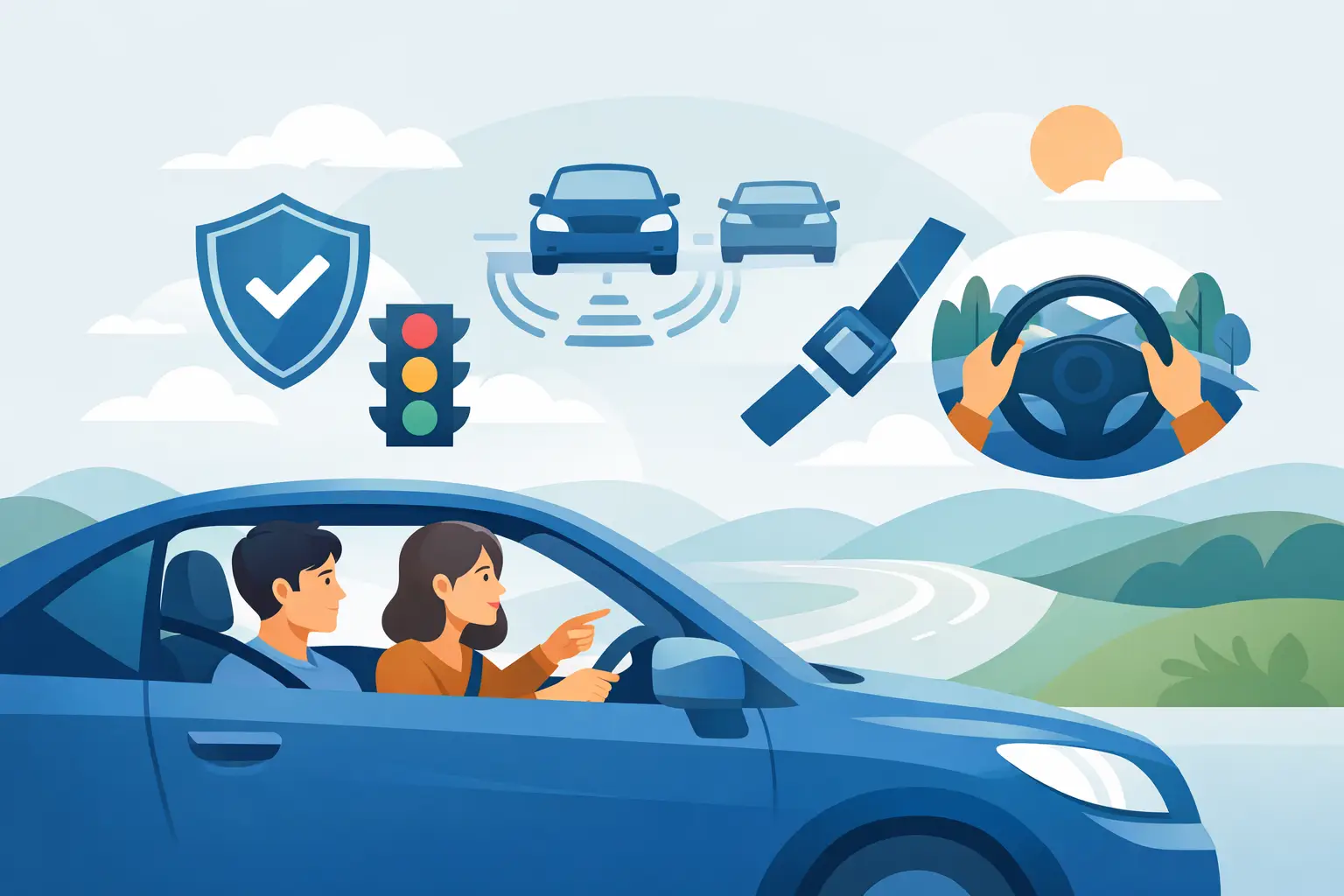
The moment many learners wobble is not usually at a big roundabout or during a parallel park. It is often much earlier – when they start to feel slightly more confident and stop paying attention to the basics. That is why safe driving habits for learners matter so much. Good habits reduce panic, cut down avoidable mistakes and make you far more likely to pass your test as a calm, consistent driver rather than a lucky one.
At Pass4you, we see this all the time with new learners, nervous drivers and pupils who have picked up poor routines elsewhere. The learners who improve fastest are not always the boldest. They are the ones who repeat the right actions until those actions become automatic.
Why safe driving habits for learners matter early on
A driving test does not just assess whether you can move a car from one place to another. It checks whether you can make sound decisions, stay aware of risk and control the car without rushing or guessing. The safest learners usually look more settled because they are not trying to remember everything at once. Their habits are doing part of the work for them.
This matters beyond the test as well. Plenty of people can scrape through a lesson by copying what the instructor says in the moment. That is different from becoming a driver who naturally checks mirrors before changing speed, reads hazards early and leaves enough room around the car. The goal is not to perform for 40 minutes. It is to become safe for years.
Start with observation, not speed
Most learner mistakes begin with weak observation. A rushed move-off, a late mirror check or a missed pedestrian can quickly turn a manageable situation into a serious fault. New drivers sometimes focus too heavily on clutch control, gears or road position and forget that observation should lead every decision.
A simple rule helps here: see first, act second. Before moving off, changing lane, slowing down, turning or stopping, your eyes should already be working ahead and around the car. That means regular mirror checks, scanning the road well in front and noticing what might change next.
In quieter residential areas around Milton Keynes, for example, the road can look easy and open. That often encourages learners to relax too much. But parked cars, hidden junctions, cyclists and people stepping out between vehicles can appear quickly. Safe driving is not about assuming the road is clear. It is about checking properly every time.
Build a mirror routine you can trust
Mirror checks only help if they happen at the right time and for the right reason. A vague glance every now and then is not enough. You need a routine that becomes second nature.
The strongest learners check mirrors before changing speed, before signalling, before changing direction and after dealing with a hazard when they need to reassess what is behind them. Over-checking can sometimes become distracting, but under-checking is far more common. If your instructor keeps reminding you about mirrors, that is not bad luck. It is a sign the habit has not settled yet.
Keep your decisions calm and early
Learners often think confidence means being decisive. It does, but not in a rushed way. Good drivers make early decisions, not sudden ones. If you notice a parked van ahead, ease off the gas and assess the situation before you reach it. If you think a traffic light may change, be ready instead of charging forward and hoping for the best.
This is one of the biggest differences between a safe learner and a stressed one. A stressed learner reacts late. A safe learner reads the road early and gives themselves time. You do not need to drive slowly all the time, but you do need to avoid last-second choices.
Leave space and you gain options
Following too closely is a classic learner problem, especially once basic control starts to improve. When you feel more comfortable steering and changing gear, it is easy to let the gap shrink without realising it.
Space gives you thinking time. It helps with smoother braking, better planning and lower stress. In wet weather, at night or on faster roads, that gap should increase. There is no prize for sitting close to the car in front. A sensible following distance is one of the simplest safe driving habits for learners, and one of the most valuable.
Learn to treat speed limits as context, not targets
A 30 mph limit does not mean 30 is always the right speed. It means that is the maximum under good conditions. This is where many learners get confused. They worry so much about being too slow that they forget speed should match the road, traffic, visibility and hazards.
If there are parked cars on both sides, children nearby or a tight bend ahead, easing down below the limit can be the safer choice. On the other hand, driving much too slowly on a clear road can create uncertainty and hold up traffic. It depends on what is happening around you.
Your aim should be steady, appropriate progress. Examiners and instructors are not looking for speed for its own sake. They want to see judgement.
Use the cockpit routine every time
Safe habits begin before the car even moves. Setting your seat, steering position, mirrors and seatbelt properly affects everything that follows. When learners skip this or rush it, their control often suffers. They may struggle with clutch movement, misjudge observation angles or feel tense at junctions.
A proper setup is not wasted time. It is part of driving well. The same goes for basic readiness. Are the doors secure? Do you understand the controls? Are you mentally switched on, or still thinking about work, college or the last lesson?
This matters even more if you are learning through intensive lessons or preparing for a test in a short timeframe. Progress comes faster when each lesson starts with focus rather than fluster.
Safe driving habits for learners in busy traffic
Busy roads can make learners feel they have to prove themselves. That usually leads to one of two problems: hesitating too much or forcing decisions. Neither is ideal.
In heavier traffic, the best habit is controlled patience. Keep your observations active, protect your space and do not let other drivers rush you into a poor move. If a gap is not right, wait. If you need a moment longer at a roundabout, take it. But stay prepared so that when a safe opportunity comes, you can move positively.
This balance is a skill, and it improves with quality practice. Areas with mixed road types, multi-lane roundabouts and changing traffic flow are useful because they teach learners how to stay composed while processing more information. The key is not to be fearless. It is to remain methodical.
Do not let one mistake create three more
A common pattern in lessons is this: a learner stalls, misses a turning or chooses the wrong lane, then mentally spirals and makes several more mistakes. Safe drivers recover quickly. They do not pretend the error did not happen, but they also do not let it take over the next five minutes.
If you make a mistake, stabilise the car, check around you and deal with what is in front of you now. One wrong turn is usually far less serious than a panicked correction. Part of safe driving is emotional control, and that takes practice too.
Build habits between lessons, not just during them
You do not need to be behind the wheel to improve. Many learners make faster progress when they actively review what happened in a lesson. Think about where you felt calm, where you felt rushed and what your instructor had to remind you about more than once.
Watching the road as a passenger can help as well. Notice how drivers approach junctions, how early they react to brake lights and how road signs affect decisions. Not every driver on the road is a good example, of course, so this works best alongside proper tuition. Still, it sharpens awareness.
If you are learning in places such as Monkston, Walnut Tree or Broughton, you may already know certain local roads as a passenger. That familiarity can help, but only if you avoid becoming casual. Known roads still require the same careful habits as unfamiliar ones.
Confidence should be earned, not rushed
Every learner wants to reach the stage where driving feels natural. That comes from repetition, structure and calm instruction, not from pushing ahead before the basics are secure. There is nothing wrong with wanting to pass quickly, but the quickest long-term progress usually comes from getting the habits right early.
If you focus on observation, space, planning and consistency, your driving starts to look calmer almost immediately. More importantly, it starts to become safer in a way that lasts beyond test day.
A helpful way to think about it is this: every lesson is not just about getting better at driving today. It is about becoming the kind of driver people feel safe sitting beside tomorrow.
Leave a Reply