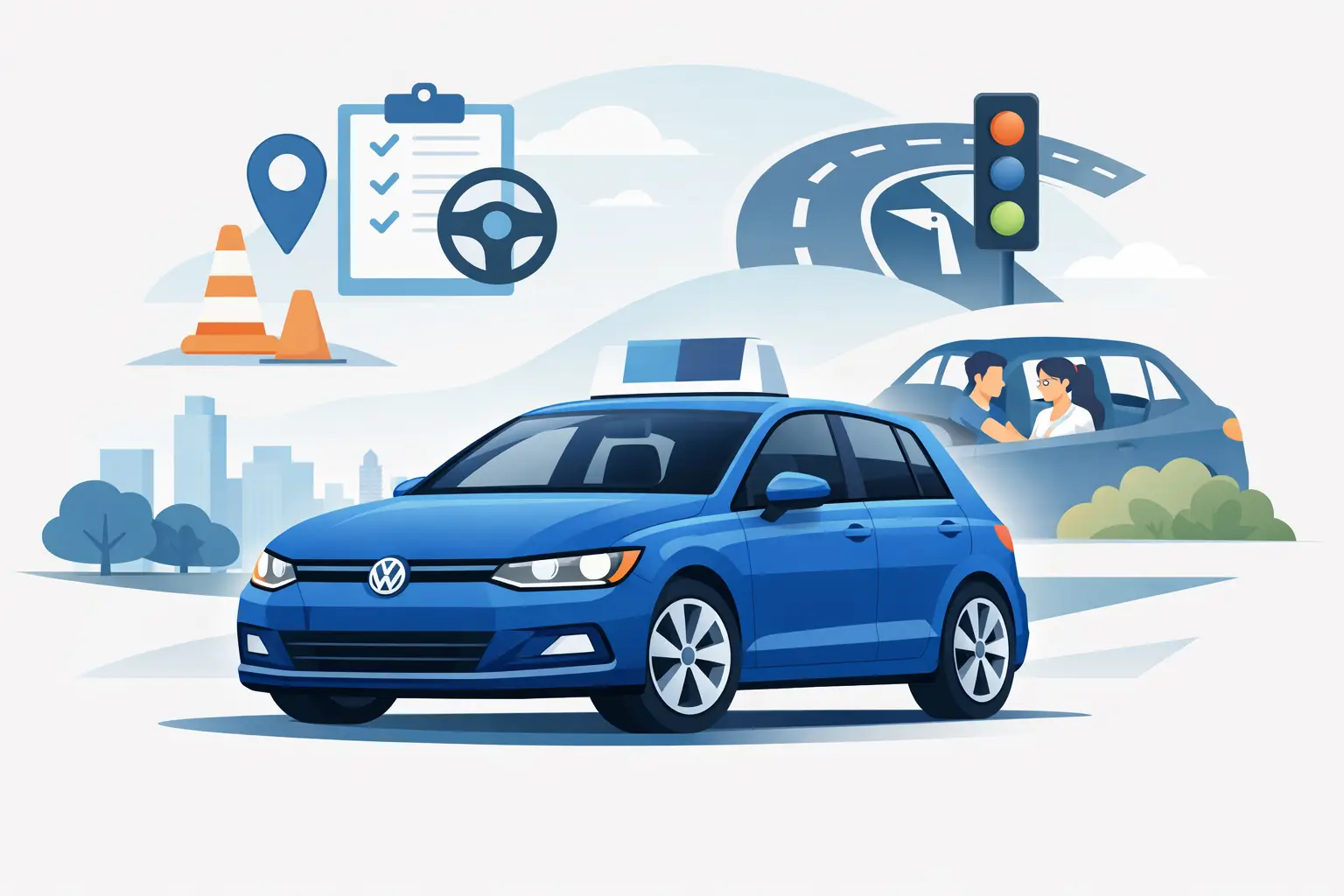
A learner usually notices the car before anything else. If the seat feels awkward, the clutch is unpredictable, or the controls seem overly complicated, confidence can disappear before the lesson has properly begun. That is why the right Volkswagen driving school car can make such a noticeable difference – not just to comfort, but to how quickly a pupil settles, learns and progresses.
For many learners, especially complete beginners or nervous drivers, the tuition car needs to do two jobs at once. It should be easy enough to drive without feeling flimsy, and reassuring enough to build trust from the first lesson. Volkswagen models used for driving tuition often strike that balance well, which is one reason they remain a popular choice with instructors who care about both pass rates and long-term driving standards.
What makes a Volkswagen driving school car a strong choice?
A good tuition vehicle is not chosen for badge value. It is chosen because it helps pupils learn safely, clearly and without unnecessary stress. That is where Volkswagen tends to perform well.
The steering is usually predictable, the pedals are progressive, and the clutch bite point is often easier to judge than in cars that feel overly sensitive. Those details matter more than many learners realise. Early lessons are full of small tasks that already demand a lot of concentration – moving off, checking mirrors, controlling speed, steering accurately and listening to instruction. If the car itself is awkward, each of those tasks becomes harder.
By contrast, a car that feels stable and forgiving gives the learner more mental space. They can focus on decision-making and observation rather than battling with the vehicle. That often leads to steadier progress over time.
Comfort matters more than people think
Driving lessons are not five-minute journeys. Many pupils now choose longer sessions because they make better use of time and allow more practice on roundabouts, dual carriageways, manoeuvres and independent driving. In a two-hour lesson, comfort becomes a genuine part of the learning experience.
Volkswagen tuition cars are often praised for supportive seating, sensible cabin layout and good visibility. That may sound like a small point, but it helps keep a learner calm. If a pupil is physically comfortable, they are less likely to become tense, distracted or tired too quickly.
This is particularly important for nervous drivers. Anxiety behind the wheel often shows up physically first – tight shoulders, overgripping the wheel, shallow breathing and rushed pedal control. A calm, well-laid-out car helps remove one layer of pressure. It does not solve nerves on its own, but it certainly does not add to them.
Clear controls support faster learning
One of the biggest frustrations for learners is feeling overwhelmed. There is already a lot to remember in each lesson, so the car should not create extra confusion.
Volkswagen interiors are typically straightforward, with controls placed logically and a driving position that is easy to adjust. From a teaching point of view, that supports structured learning. A pupil can understand the setup quickly, develop routines and begin repeating them with confidence.
Consistency is crucial when someone is learning to drive. Repeated actions become habits, and good habits are what carry learners through the test and into everyday driving afterwards. If the car responds consistently, it is much easier for the instructor to coach precise improvements.
That is especially useful when working on the areas where pupils often lose marks – moving off under control, approaching junctions at the right speed, parking accurately and keeping the car balanced in slower traffic.
Safety and reassurance go together
Safety features are expected in modern tuition vehicles, but what matters is how they contribute to the learner’s confidence. A solid-feeling car with reliable braking and stable road handling can make ordinary situations feel less intimidating.
Think about a pupil joining a busy roundabout for the first time or meeting traffic on a narrow residential road. In those moments, a planted and predictable car is reassuring. The learner is more likely to stay composed and respond properly when the vehicle feels secure beneath them.
That same reassurance matters for parents too. If a family is paying for lessons, they want to know their son or daughter is learning in a modern, well-maintained car that supports safe instruction. For working adults returning to lessons after a long gap, the same principle applies. Trust in the vehicle is part of trust in the whole learning process.
Is a Volkswagen driving school car right for every learner?
Usually, yes – but there are still individual preferences. Some learners take to a car immediately, while others need a lesson or two to adjust. Height, leg position, footwear and previous driving experience can all affect how a car feels at first.
The useful thing about a Volkswagen as a tuition car is that it tends to suit a wide range of learners. Complete beginners often like the predictable controls, while more test-ready pupils benefit from the way the car rewards smoother, more accurate driving. It can support both ends of the journey – from the first clutch control exercise to polishing independent driving before test day.
That said, the car is only part of the picture. A high-quality vehicle does not replace a patient instructor. Learners make the best progress when the car and the teaching style work together. Calm explanations, clear lesson structure and honest feedback still matter most.
How the right car can improve confidence after a bad experience
Some pupils come to lessons carrying more than nerves. They may have changed instructor, failed a test, or spent money on lessons that did not feel productive. In that situation, the car can play an unexpected role in rebuilding confidence.
A stable, easy-to-read vehicle gives the learner a fresh start. They are not fighting unfamiliar quirks or trying to second-guess a difficult clutch. They can begin focusing on what they are doing well and where they need to improve.
That matters because confidence in driving should be earned, not faked. A pupil gains real confidence when they understand the car, can predict how it will respond and start making good decisions consistently. The right tuition vehicle helps create those early wins.
Why instructors often choose Volkswagen for tuition
Driving instructors are practical people. They rely on a car every day, across different road types, traffic conditions and pupil ability levels. Their choice usually comes down to reliability, ease of use, comfort and whether the car supports effective teaching.
Volkswagen has built a strong reputation in those areas. For an instructor, that means fewer distractions and more consistent lessons. For a pupil, it means they are learning in a car designed to feel stable, modern and easy to manage.
There is also a professional impression to consider. Learners often feel more reassured stepping into a clean, well-presented, modern Volkswagen than they would in an older or less refined vehicle. That first impression helps set the tone. It says the lessons are being taken seriously.
For a driving school built around calm, structured teaching and strong first-time pass results, that fit makes sense. At Pass4you, for example, using a modern Volkswagen tuition vehicle supports the wider aim – helping learners in and around Milton Keynes become confident, safe drivers without wasting time on ineffective lessons.
Test preparation and everyday driving
The driving test is the immediate goal for most pupils, but it should not be the only one. A learner who passes without feeling genuinely ready often struggles afterwards when driving alone.
This is another reason a well-balanced tuition car matters. A Volkswagen driving school car tends to feel close enough to the sort of car many people may drive after passing. It gives a realistic sense of road position, clutch control, braking and general handling rather than encouraging shortcuts that only work in a very specific vehicle.
That makes test preparation more useful. Pupils are not just learning how to get through forty minutes with an examiner. They are learning habits they can carry into commuting, supermarket car parks, school runs and motorway driving later on.
For learners in busier parts of Milton Keynes, where roundabouts, changing speed limits and mixed traffic conditions are part of normal driving, that practical confidence is especially valuable.
What learners should really look for
If you are choosing a driving school, the make of car should not be the only factor, but it should not be dismissed either. The best setup is a combination of patient instruction, clear lesson planning, a proven teaching record and a car that helps rather than hinders progress.
A Volkswagen is a strong option because it supports the fundamentals properly. It gives many learners the calm, predictable driving experience they need in order to focus, improve and build confidence. That can make lessons feel less stressful and more productive, which is exactly what most pupils want.
If you are starting from scratch, feeling nervous, or returning after a setback, do not underestimate the value of learning in a car that feels stable, comfortable and easy to understand. Sometimes progress begins with something as simple as sitting in the right seat, turning the key, and realising this feels manageable after all.
Leave a Reply