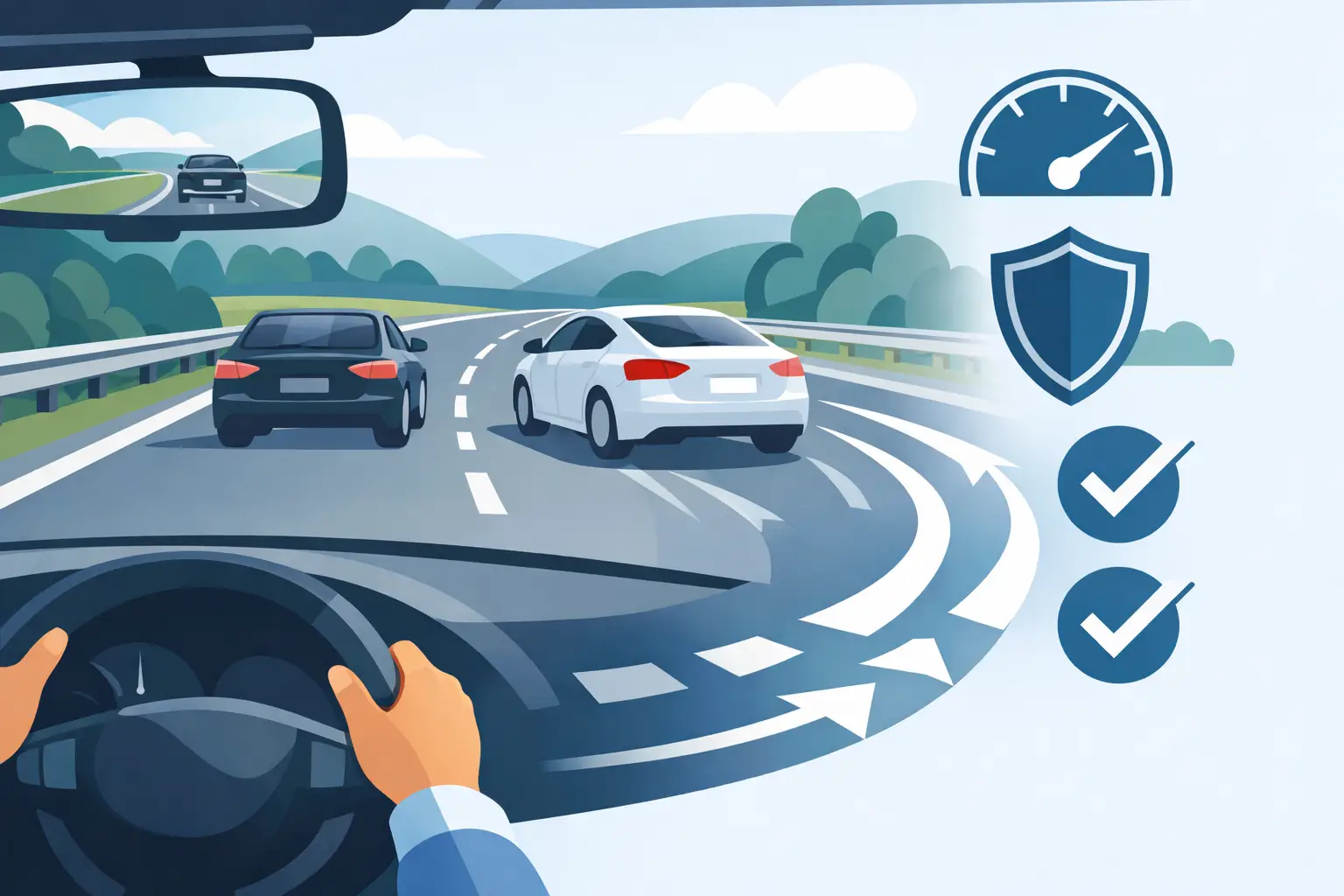
Most learners do not fail because they are incapable. They fail because their practice is too scattered, their nerves take over, or they reach test standard in some areas but not all. If you are looking for the best ways to pass quickly, the answer is not rushing for the sake of it. It is learning in a focused, structured way that gets you test-ready without cutting corners.
For some people, that means an intensive course. For others, it means two-hour lessons each week with consistent private practice in between. The quickest route is rarely the one with the fewest lessons. It is the one that uses your time well, builds confidence properly and deals with weaknesses before test day.
What the best ways to pass quickly really look like
Passing quickly starts with honesty about your current level. A complete beginner needs a different plan from someone who has already had lessons, failed once, or not driven for several months. When learners try to follow a one-size-fits-all approach, they often waste money repeating skills they already have or booking a test before they are ready.
A good instructor should assess where you are, explain what needs work and give you a realistic path to test standard. That matters because speed without structure usually leads to frustration. Structured learning, on the other hand, helps you improve faster because each lesson builds on the last.
It also helps to think beyond simply passing. Examiners are not looking for perfection. They are looking for a safe, consistent driver who can make sensible decisions. Learners who focus only on memorising routes or ticking boxes often come unstuck when something unexpected happens. Learners who understand what they are doing and why tend to cope much better.
Choose lessons that match your timeline
If you need to pass quickly for work, university or family reasons, your lesson format matters. One-hour lessons can work well, especially if you are learning steadily over time, but they are not always the fastest option. By the time you settle in, recap the previous lesson and begin a new skill, the hour can go very quickly.
Two-hour lessons usually give better momentum. You have more time to practise, reflect and repeat manoeuvres or roundabouts until they start to feel natural. That can make a real difference if you want to progress faster without feeling rushed.
For some learners, intensive driving courses are the best fit. They work particularly well if you can concentrate for longer periods, have a clear deadline and want to build continuity over a shorter period. The trade-off is that intensive learning is demanding. If you are a very nervous beginner, packing too much into a few days may feel overwhelming. In that case, a steady but focused weekly plan may get better results.
Consistency beats occasional cramming
One of the most overlooked ways to pass quickly is keeping your lessons close together. Large gaps between lessons can slow everything down. You spend more time going over old ground and less time moving forward.
That is why regular weekly lessons often work better than booking sessions only when it suits. If your diary is busy, booking ahead can help protect your progress. Working professionals and key workers especially benefit from a fixed routine because it removes the stress of trying to fit lessons around everything else.
If you can add private practice with a suitable supervising driver, that can speed things up as well. It does not replace professional instruction, but it can reinforce what you covered in lessons. The key is quality, not just hours. Practising the wrong habits repeatedly will not help you pass sooner.
Focus on the skills most likely to hold you back
Many learners are comfortable driving on ordinary roads but struggle with the areas that tend to decide test outcomes. Roundabouts, meeting traffic, independent driving, lane discipline and observations during manoeuvres are common examples.
The fastest progress usually comes from targeting those sticking points early instead of avoiding them. A patient instructor should not simply tell you to keep trying. They should break the skill down, explain it clearly and help you repeat it until it becomes manageable.
This matters a lot for nervous drivers. Anxiety often makes a problem feel bigger than it is. When a lesson is calm and properly structured, the problem becomes easier to understand. You stop thinking, “I am bad at roundabouts,” and start thinking, “I need to judge speed and gaps more calmly.” That shift helps learners improve much faster.
Best ways to pass quickly after a failed test
If you have already failed, speed has to be handled carefully. Some learners are genuinely close and just need a few focused lessons before rebooking. Others feel ready because they know the test route, but the same faults are still there.
The best approach is to review the driving faults properly. Was it nerves, observations, positioning, judgement at junctions, or something else? Once you know the pattern, you can work on the cause rather than guessing.
This is where calm instruction makes a real difference. Learners who have had a poor experience with a previous instructor often carry extra pressure into the car. They rush decisions, overthink small mistakes and lose confidence quickly. A more patient teaching style can rebuild trust in your own driving, which often leads to better results than simply adding more hours.
Learn the test area, but do not rely on route memory
Knowing the roads around your test area can help. You become more familiar with local roundabouts, speed changes, lane markings and common hazards. In places around Milton Keynes, for example, confidence with roundabout routines and reading road signs early can save a lot of hesitation.
But route familiarity is only useful if it sits on top of proper driving ability. Examiners can change direction at any moment. Traffic conditions can be different from one day to the next. If your confidence depends on recognising a road, it can disappear very quickly when something changes.
A better strategy is to practise in a variety of conditions while still covering local roads that are likely to challenge you. That gives you both familiarity and adaptability, which is far more useful on test day.
Use mock tests the right way
Mock tests can be one of the best ways to pass quickly because they expose issues before the real test does. They show how you cope with pressure, whether your concentration drops, and which faults return when you are not being prompted.
That said, a mock test should not just be a box-ticking exercise. It is most useful when followed by clear feedback and a plan. If a learner keeps making the same serious or dangerous fault, that needs direct work. If the issue is mostly nerves, then the answer may be repeated mock practice and better pre-test routines rather than more technical teaching.
A strong instructor will use mock tests to sharpen your readiness, not to knock your confidence.
Do not confuse being busy with making progress
Some learners book lots of lessons and still feel stuck. Usually, that comes down to lesson quality. If the teaching is inconsistent, overly critical or not tailored to the learner, progress slows down even when the diary is full.
The quickest learners are often not the ones doing the most hours. They are the ones getting clear explanations, honest feedback and lessons pitched at the right level. They know what they are working on and why.
That is also why choosing the cheapest option can backfire. Good instruction may cost more per hour, but poor teaching often costs more overall because it adds extra lessons, extra stress and sometimes another test fee.
For learners in and around areas such as Monkston, Walnut Tree or Broughton, having a local instructor who understands the roads, adapts lessons to your pace and keeps standards high can make the process far more efficient. At Pass4you, that focus on calm, personalised teaching is a big reason so many pupils reach test standard with genuine confidence rather than luck.
Best ways to pass quickly without picking up bad habits
The pressure to pass quickly can tempt learners to chase shortcuts. They may ignore weak areas, rely too heavily on a family member’s advice or book the earliest possible test date just to feel like progress is happening. Usually, that only delays things.
A better fast-track approach is simple. Learn with structure, practise consistently, fix faults early and keep your standard honest. If you are test-ready, a good instructor will tell you. If you are not, the right advice at the right time can save you from a disappointing result.
Passing quickly is a good goal. Passing quickly and becoming a safe, capable driver is the better one. When your learning is calm, focused and properly supported, those two things often go together.
The real win is not just hearing that you have passed. It is knowing you can drive away afterwards with confidence, good judgement and the skills to handle the road on your own.
Leave a Reply