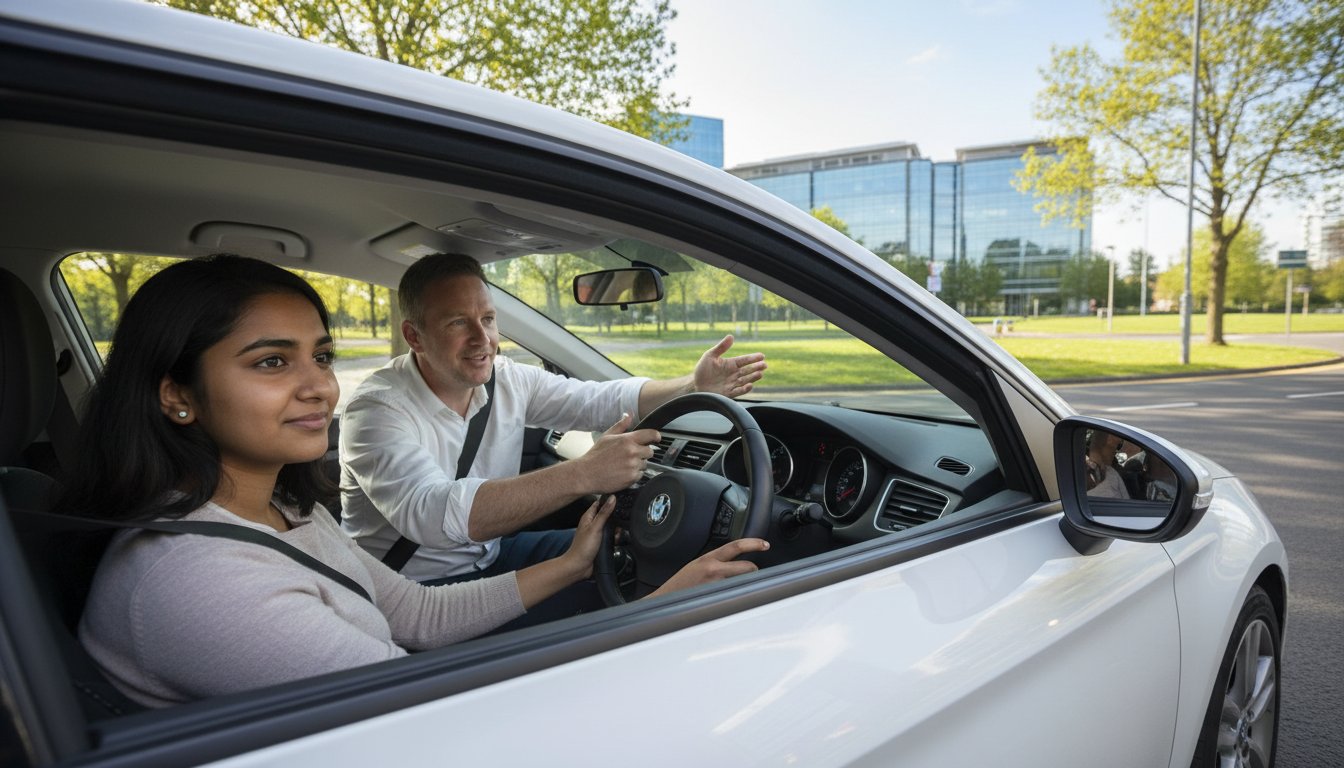
Tag: driving lesson cost

  • How Many Driving Lessons to Pass Your Test in the UK? (2026 Guide)

    How Many Driving Lessons to Pass Your Test in the UK? (2026 Guide)

    The Driver and Vehicle Standards Agency (DVSA) reports that the average learner requires 45 hours of professional tuition plus 22 hours of private practice to reach the required standard. It’s completely normal to feel anxious about these figures or worry about wasting money on unnecessary sessions. You’ve likely heard conflicting stories from friends about passing in ten hours, but you want to ensure you’re actually a safe driver for life, not just someone who got lucky on the day.

    If you’re wondering exactly how many driving lessons to pass test uk in 2026, you’re in the right place to find a realistic answer. Here at Pass4you Driving School, we’ll help you understand the specific factors that influence your timeline and show you how a patient, structured approach can actually save you money by reducing the total number of hours required. This guide breaks down the costs, explains how to reach test-standard efficiency faster, and gives you the confidence to choose an instructor who puts your progress first.

    Key Takeaways

    • Understand the official DVSA benchmarks to learn how many driving lessons to pass test uk and why combining professional tuition with private practice is the most efficient route.
    • Discover how choosing the right lesson frequency and duration can prevent “lesson burnout” and help you master the road in fewer total sessions.
    • Compare the learning timelines for manual and automatic gearboxes to see which transmission type helps you reach your goals faster and more confidently.
    • Identify the specific skills you must master to be truly “test-ready,” from independent driving to perfecting every essential road manoeuvre.
    • Learn how a calm, patient approach can significantly improve your chances of joining the 83.33% of our students who achieve a first-time pass.

    The National Average: How Many Lessons Does the DVSA Recommend?

    Most people starting their driving journey want a straight answer to the question: how many driving lessons to pass test uk? While every learner is unique, the Driver and Vehicle Standards Agency (DVSA) provides a clear statistical starting point. Their data shows that the average successful candidate requires 45 hours of professional tuition to reach the required standard. This isn’t just about learning where the pedals are; it’s about developing the muscle memory and hazard perception needed to stay safe on modern, busy roads.

    In addition to professional lessons, the DVSA suggests that learners benefit from an extra 22 hours of private practice. This brings the total recommended experience to 67 hours before you head to the test centre. These figures serve as a helpful benchmark for budgeting your time and money. However, they aren’t strict rules. At Pass4you, we’ve seen students pass with fewer hours, while others prefer more time to feel truly calm and collected. The goal isn’t just to scrape through the exam; it’s to become a safe driver for life.

    There is a massive difference between “learning to move the car” and being “test-ready”. Most learners can master basic car control, like moving off and stopping, within the first five hours. Becoming test-ready is a higher bar. It requires you to handle complex junctions, unpredictable pedestrians, and high-speed dual carriageways without needing your instructor to intervene. For a detailed look at what the examiners are looking for, you can check this UK driving test overview to understand the full scope of the assessment.

    Professional Instruction vs. Private Practice

    Professional instruction from an Approved Driving Instructor (ADI) is the foundation of your success. Instructors like Simon are trained to spot small mistakes before they become dangerous habits. When you learn with a professional, you’re getting a structured syllabus designed to cover every possible scenario you might face during your test. We focus on building your confidence slowly and patiently, ensuring you never feel rushed or overwhelmed by the traffic around you.

    Relying solely on private practice with parents or friends can be risky. While their intentions are good, family members often pass on outdated techniques or “shortcuts” that lead to immediate faults on a modern driving test. It’s also common for these sessions to become stressful, leading to arguments that knock your confidence. The best approach is to use private practice as a way to reinforce the professional habits Simon teaches you. This balanced method helps you reach that 67-hour competency goal much faster and more effectively.

    The Legal Minimum: Is There One?

    Technically, there is no legal minimum number of hours you must complete before booking your test. You could, in theory, apply for your practical exam the day after receiving your provisional licence. However, doing this is almost always a false economy. Test waiting lists are currently long, and the cost of a failed test includes both the booking fee and the price of additional remedial lessons.

    Booking a test too early often results in a “fail” and a significant blow to your self-esteem. We take pride in our 83.33% first-time pass rate because we only encourage students to book when they are genuinely ready. Our patient, mentor-led approach ensures that when you do arrive at the test centre, you feel like a competent driver rather than a nervous student. It’s about value for money; fewer tests mean less money spent in the long run.

    The DVSA sets a benchmark of 45 hours of professional tuition as the standard for ensuring a learner is safe and competent on the road.

    5 Factors That Influence Your Learning Timeline

    Every learner starts from a different position. If you have spent years riding a moped or spent weekends practicing steering in a private field, you will likely shave 10 hours off your total tally. These students already understand the basics of road positioning and “the bite” of a clutch. When people ask how many driving lessons to pass test uk, they often forget that previous exposure to vehicle controls creates a massive head start. Your age plays a role too. Data suggests that 17-year-olds often develop the necessary muscle memory for gear changes faster than those in their 40s. However, older learners frequently bring better hazard perception skills from years of being a passenger or cyclist.

    The “Nervous Learner” factor is perhaps the most significant variable. Anxiety triggers a “fight or flight” response that makes it physically harder for the brain to retain complex instructions. This is where the quality of your mentor becomes vital. A shouting instructor will only increase your stress and extend your learning timeline. Simon at Pass4you focuses on a calm, patient atmosphere. This supportive environment is a key reason why our students achieve an 83.33% first time pass rate. A mentor who builds your confidence rather than knocking it down helps you master difficult manoeuvres in half the time.

    According to DVSA’s Ready to Pass? guidance, the average learner requires 45 hours of professional tuition combined with 22 hours of private practice. However, these figures aren’t set in stone. Your learning style and how you process physical tasks will ultimately dictate your personal journey. Some people are visual learners who benefit from diagrams, while others need to “feel” the car’s movements repeatedly before it clicks.

    The Importance of Lesson Consistency

    Consistency is the enemy of “skill fade.” If you leave a two-week gap between sessions, the first 20 minutes of your next lesson are usually spent retracing old ground. We recommend 1.5 to 2-hour sessions for maximum focus. This duration allows enough time to drive to various road types, such as dual carriageways or busy roundabouts, without feeling rushed. Block-booking your sessions ensures a steady progression through the syllabus and prevents you from losing your preferred time slot in Simon’s diary.

    Private Practice: The Secret Speed-Up

    Private practice is a fantastic way to reinforce what you have learned with an instructor. You should use a learner driver logbook to track your progress and show your supervisor exactly what needs work. Focus on “low-stakes” skills like clutch control in a quiet car park or basic observation on familiar local streets. Before you start, ensure the vehicle is properly insured for a learner and displays L-plates on the front and rear. If you want to see how a structured approach can reduce your total cost, you can book your first session with Simon today.

    Remember that private practice should complement, not replace, professional training. Friends and family might have “bad habits” that could lead to a fail on your practical test. Use your time with Simon to learn the correct, modern techniques, then use private sessions to build the “mileage” and confidence that only comes with time behind the wheel. Balancing these two types of practice is the fastest way to reach test-ready status.

    Manual vs. Automatic: Does the Gearbox Affect the Count?

    Choosing between a manual or automatic car is one of the first decisions you’ll make. It significantly changes the answer to how many driving lessons to pass test uk. On average, learners opting for an automatic gearbox require 15 to 20 fewer hours of professional tuition than those in a manual. This gap exists because automatic learners don’t have to master the complex coordination of a clutch pedal and gear stick. While a manual learner might spend their first five to eight hours just trying not to stall, an automatic learner is often already practicing junctions and roundabouts by their second lesson.

    The manual transmission hurdle is a physical one. You have to find the “biting point” with your left foot while balancing the accelerator with your right. If you get it wrong at a busy junction, the car stalls. This can be incredibly stressful for a nervous driver. According to the RAC’s driving test guide, mastering car control is a vital foundation before you can tackle complex road layouts. By removing the gearbox from the equation, you simplify the learning process and often reach a test-ready standard much faster.

    Why Automatic is Faster

    Automatic cars eliminate the risk of stalling and gear-change errors. This allows you to keep both hands on the wheel and your eyes on the road. It’s an ideal choice if you find physical coordination overwhelming or if you want to pass your test in a shorter timeframe. With the UK moving toward electric vehicles (EVs), which are almost all automatic, an auto-only licence is becoming more practical. By 2030, the majority of cars on UK roads will likely be automatic, making the manual “advantage” less relevant for daily commuting.

    Learning in Milton Keynes: Roundabouts and Dual Carriageways

    Milton Keynes presents a unique challenge for any student. Our famous grid system and high-speed dual carriageways, such as the H6 Childs Way or the V8 Saxon Street, require high-level observation skills. Navigating dozens of roundabouts in a single hour is exhausting in a manual car. You’re constantly shifting from fourth gear down to second and back again. In an automatic, you can focus entirely on your lane positioning and exit signals.

    At Pass4you, we use modern, easy-to-drive Volkswagen vehicles that make the technical side of driving much simpler. Local knowledge of the Bletchley and Milton Keynes test centres is vital for success. Simon’s patient and calm teaching style ensures you don’t feel rushed when approaching these busy junctions. This supportive environment is why we maintain an 83.33% first-time pass rate. We focus on making you a safe driver for life, whether you choose the traditional manual route or the faster automatic path. When calculating how many driving lessons to pass test uk, remember that your choice of gearbox is the biggest factor in your total cost and timeline.

    While an automatic licence is quicker to obtain, you won’t be legally allowed to drive a manual car later. If you’re looking for the most versatile licence, manual is still the way to go. However, if your priority is building confidence and getting on the road quickly, the automatic option offers excellent value for money. You’ll likely need fewer than the 45-hour national average, saving you hundreds of pounds in lesson fees.

    The “Ready for Test” Checklist: Beyond the Hours

    While tracking your progress by the clock is a helpful starting point, your instructor looks for specific milestones before suggesting you book your practical exam. It isn’t just about how many driving lessons to pass test uk you’ve completed; it’s about your ability to handle the car safely without a safety net. At Pass4you, Simon ensures every student meets a rigorous internal standard that goes far beyond simply steering the car. We want you to feel calm and capable when you finally meet the examiner.

    Your instructor will assess your readiness based on several key performance indicators. You must be able to drive for a full lesson without any verbal prompts or physical intervention from the dual controls. If Simon has to remind you to check a blind spot or adjust your speed, you aren’t quite ready for the pressure of a test. You also need to master the four core manoeuvres: parallel parking, forward bay parking, reversing into a bay, and pulling up on the right side of the road before reversing two car lengths. These must be completed with 100% accuracy and, more importantly, constant all-round observations.

    • Independent Driving: You must follow a sat-nav or road signs for 20 minutes, which covers 50% of the modern UK driving test.
    • Show Me, Tell Me: You need to be confident with all 19 possible questions regarding vehicle safety and maintenance.
    • Emergency Stop: While this only occurs in 1 in 5 tests, you must be able to perform it instantly and safely.
    • Consistency: You should be able to drive through various road types, from narrow residential streets to busy dual carriageways, without making serious mistakes.

    The Role of the Mock Test

    The mock test is a vital tool we use to simulate the exact atmosphere of the DVSA exam. It helps you understand the weight of the situation without the risk of losing your £62 test fee. During these sessions, we look for “serious” or “dangerous” faults that would result in an immediate fail. By identifying these issues in a controlled environment, we can fix them before they become a problem on the big day. Mock tests are brilliant for alleviating nerves because they turn the unknown into a familiar routine. Students who pass a mock test with us often report feeling much more relaxed during the actual exam.

    Mental Readiness and Confidence

    Confidence is the bridge between being a learner and becoming a qualified driver. We focus on moving you from a mindset of “I hope the examiner is nice” to “I know I am a safe driver”. Test readiness is the ability to drive safely without any help. This mental shift is crucial because it allows you to handle small mistakes without letting them spiral into larger ones. If you stall the car, a ready driver stays calm, secures the vehicle, and restarts it safely without panic. Simon’s patient teaching style is designed to build this resilience, ensuring you don’t just pass the test but remain a safe driver for life. Our 83.33% first-time pass rate proves that when you feel confident, the results follow naturally.

    If you want to build the skills and confidence needed for a first-time pass, book your driving lessons with Simon today and start your journey toward independence.

    Pass4you: Why Quality Instruction Saves You Money

    When you’re researching how many driving lessons to pass test uk, the final number is often decided by the quality of instruction you receive. It’s tempting to pick the school with the lowest hourly rate, but this is a common trap that leads to lesson burnout and a mountain of hidden costs. At Pass4you, we focus on efficiency and confidence. Our 83.33% first-time pass rate is significantly higher than the national average of 48%. This isn’t just a statistic; it represents dozens of students who saved hundreds of pounds by avoiding repeated test fees and extra blocks of lessons.

    Simon provides a calm, patient atmosphere that is the direct opposite of the high-pressure environments that cause learners to stall in their progress. When you’re stressed, you don’t retain information. This leads to wasted hours repeating the same manoeuvres over and over. By maintaining a supportive environment, we ensure every minute of your lesson is productive. We also look beyond the 40-minute practical exam. Our goal is to make you a safe driver for life. We teach you how to anticipate hazards and manage real-world traffic, not just how to tick boxes for an examiner.

    Tried and Tested Techniques

    Our success comes from a structured yet flexible methodology. We’ve spent years honing a technique that works for nervous beginners and those looking to polish their skills. Each student receives a personalised lesson plan tailored to their specific strengths. If you’re a natural at clutch control but struggle with observations, we’ll pivot our focus to ensure you’re balanced and ready. We don’t believe in dragging out the process; we want you on the road as soon as you’re safely prepared.

    You’ll also benefit from learning in a modern, reliable Volkswagen tuition vehicle. These cars are chosen for their ease of use and excellent safety features, making them the perfect environment for building confidence. We hear from many Milton Keynes learners who switched to us after feeling stuck with other instructors. One learner recently passed with only three minor faults after just ten hours with Simon, despite failing twice with a different school previously. This shows that the right instructor can drastically reduce the total number of hours you need.

    Your Next Steps to Freedom

    The journey to independence shouldn’t be a source of anxiety. To get started, you simply need to reach out and book your introductory session. We highly recommend tackling your theory test as early as possible. Practical test slots in the UK are currently in high demand. If you pass your theory early, we can secure a practical date that aligns perfectly with your progress, avoiding frustrating delays that can cause your skills to fade.

    Don’t spend another month wondering how many driving lessons to pass test uk. Instead, choose the path that leads to a first-time pass and lifelong safety. Book your first lesson with Pass4you today and experience our patient approach. Your new life behind the wheel is closer than you think, and we’re here to help you reach it without the stress.

    Get Behind the Wheel with Confidence

    The DVSA suggests a national average of 45 hours of professional tuition, yet your individual journey depends on your personal pace and the support you receive. Whether you choose a manual or automatic gearbox, the goal remains the same. You want to feel safe and prepared for the road ahead without wasting money on endless, repetitive sessions. Understanding how many driving lessons to pass test uk students require often comes down to the quality of the instruction. You’ll progress much faster with a mentor who understands your nerves and tailors every session to your specific needs.

    Simon provides patient, calm instruction in modern Volkswagen tuition vehicles, ensuring you build the skills necessary to succeed. By focusing on excellence from day one, you reduce the total number of hours needed and save your hard-earned cash. It’s time to stop worrying about the numbers and start looking forward to the freedom of the open road. You’ve got the potential to be a safe driver for life; you just need the right environment to prove it.

    Join the 83.33% who pass first time-Book your lessons with Pass4you

    Frequently Asked Questions

    Is 20 driving lessons enough to pass the test in the UK?

    20 driving lessons is usually not enough for most learners to reach the required safety standard for the UK practical test. The Driver and Vehicle Standards Agency (DVSA) reports that the average learner needs 45 hours of professional tuition to pass. While some students with previous experience might manage with fewer sessions, we focus on making you a safe driver for life rather than just rushing to the finish line.

    Can I pass my driving test in 2 weeks with an intensive course?

    You can pass your test in 14 days with a structured intensive course, provided you have already passed your theory test. These fast-track programmes involve 4 to 6 hours of driving daily to build muscle memory quickly. Success depends on your ability to absorb information under pressure and the current 24-week average waiting time for practical test slots at most UK centres.

    How many hours of private practice should I do alongside my lessons?

    You should aim for approximately 22 hours of private practice to supplement your professional tuition. This extra time behind the wheel helps you familiarise yourself with local roads and builds confidence in a relaxed environment. Combining professional lessons with family practice is a proven way to reduce the total number of how many driving lessons to pass test uk you will eventually need.

    What is the average pass rate for first-time drivers in Milton Keynes?

    The average first-time pass rate at the Milton Keynes Bletchley test centre is 46.7% based on 2023/24 DVSA data. Our students at Pass4you reach a much higher 83.33% first-time pass rate because Simon uses a calm and patient approach. This professional guidance helps you feel confident on the road, rather than feeling rushed or pressured during your learning journey.

    Does the DVSA require a certificate of completed hours before the test?

    No, the DVSA does not require you to show a certificate or proof of completed hours when you arrive for your practical test. Your instructor will simply sign your photocard licence digitally or on paper to confirm you are ready. While there is no legal minimum, we only recommend booking your slot once you consistently meet the National Standard for driving without any help from your instructor.

    Why do some people need 60 or more hours to pass?

    Some learners require 60 hours or more due to factors like high anxiety, long gaps between lessons, or starting later in life. If you only take one hour a week, you often spend the first 20 minutes refreshing what you forgot in the previous session. We find that students who have had negative experiences with shouting instructors often need extra time to rebuild their confidence and unlearn bad habits.

    Can I take my driving test in my own car?

    You can use your own car for the practical test if it meets specific DVSA requirements, such as having an extra rear-view mirror for the examiner. The vehicle must be taxed, insured for a test, and have a valid MOT. Most of our students prefer using our tuition cars because they are fitted with dual controls; this provides an extra layer of safety and reassurance during the high-pressure environment of the test.

    How much do driving lessons cost in Milton Keynes for 2026?

    Standard driving lessons in Milton Keynes are expected to average £42 per hour by January 2026. We focus on providing value for money rather than just being the cheapest option available. By using our efficient teaching methods, you will likely need fewer sessions, which lowers the overall cost of how many driving lessons to pass test uk in the long run.
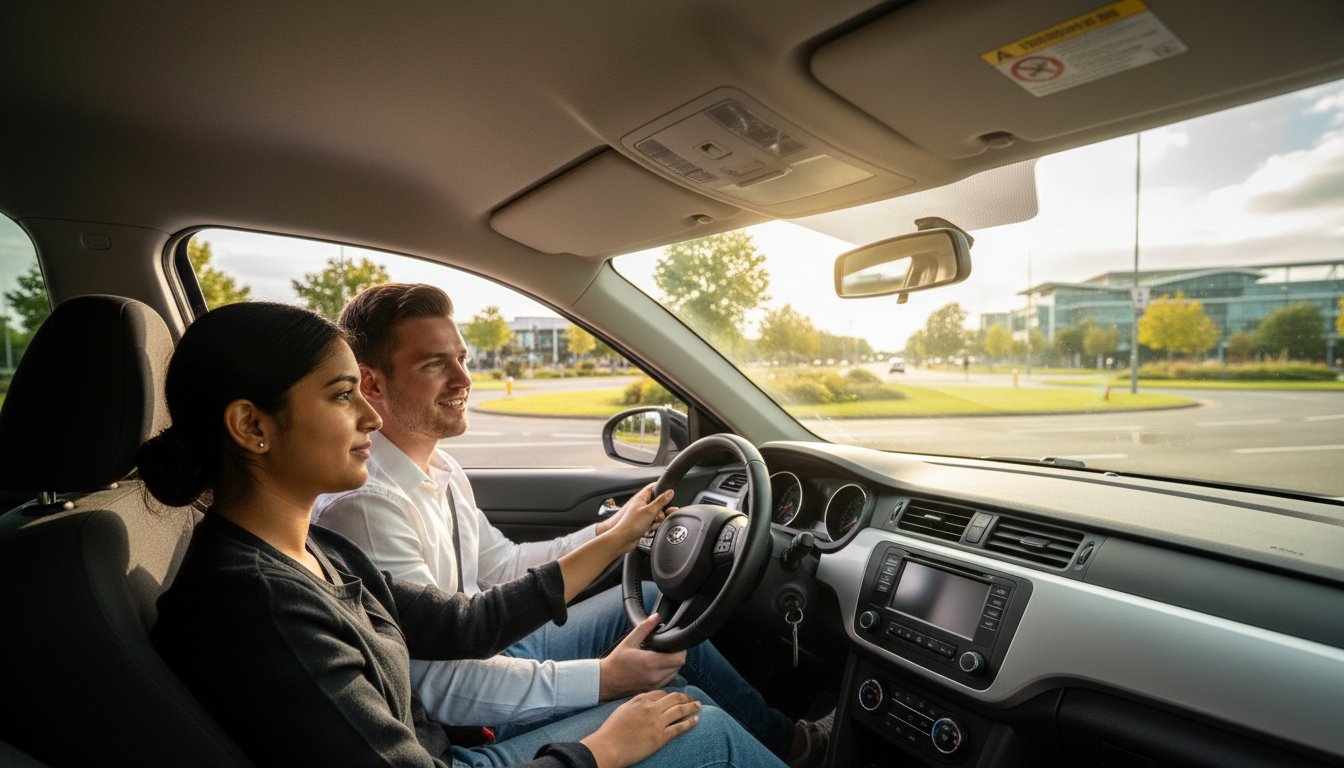
  • How Much Do Driving Lessons Cost in 2026? The Complete UK Budgeting Guide

    How Much Do Driving Lessons Cost in 2026? The Complete UK Budgeting Guide

    What if the “cheapest” instructor you found actually ends up costing you £600 more because they drag out your progress? It’s completely natural to feel anxious about the rising driving lesson cost in 2026. You want to know exactly what you’re paying for without any nasty surprises or hidden fees halfway through your journey. We understand that unpredictable totals and the fear of failing multiple times can make the process feel overwhelming. You deserve a clear path to your licence that doesn’t break the bank.

    We’re here to help you feel calm and in control of your budget. This guide provides an honest, professional breakdown of everything from hourly regional rates to the price of your final practical test. You’ll learn how to spot true value for money and why a patient, experienced mentor is your best tool for avoiding expensive retakes. We’ll show you how our focus on building your confidence leads to an 83.33% first-time pass rate, ensuring you become a safe driver for life without wasting a single penny.

    Key Takeaways

    • Understand the 2026 national averages and why the driving lesson cost in Milton Keynes offers better long-term value than simply chasing the lowest hourly rate.
    • Learn how to reduce your total expenditure by utilising block booking discounts and maximising your “wheel time” with consistent two-hour sessions.
    • Budget accurately for your entire journey by identifying often-overlooked fees, such as provisional licence applications and theory revision materials.
    • Discover how training in a modern, calm environment with a Grade A instructor can significantly improve your chances of joining our 83.33% first-time pass rate.

    The Average Driving Lesson Cost in 2026: A National and Local Overview

    Starting your journey toward independence is an exciting milestone. In 2026, the average driving lesson cost in the UK typically ranges between £35 and £50 per hour. This price bracket reflects the professional expertise required to navigate today’s busy roads safely. While these figures might seem higher than in previous years, they account for the significant overheads instructors manage. For instance, specialised tuition insurance premiums saw a 14% increase in the first quarter of 2026. Additionally, while the transition to electric vehicles (EVs) is well underway, the initial investment for instructors remains high.

    We understand that budgeting for your licence can feel stressful. It’s why we focus on a calm, patient approach that builds your confidence quickly. When you feel safe and supported, you learn faster. This efficiency is vital because the true cost isn’t just the hourly rate; it’s how many hours you need before you’re ready. Our 83.33% first-time pass rate means our students often spend less overall compared to those lured by “budget” schools. Before you start booking, it’s helpful to understand the full process of obtaining a UK driving licence, which includes both the theory and practical requirements.

    Be cautious of introductory offers that seem too good to be true. A “5 lessons for £99” deal often masks a sharp price hike for the remaining 30 or 40 hours you’ll likely need. We believe in transparency. We don’t want you to feel rushed or pressured by hidden fees. Instead, we provide a steady, reliable path to becoming a safe driver for life. Choosing an instructor like Simon means you’re getting a mentor who cares about your progress, not just someone watching the clock.

    Regional Price Variance: Milton Keynes vs. The UK

    Location plays a massive role in what you’ll pay. In London, prices frequently hit the £55 mark. However, in Milton Keynes, we see a different dynamic. The unique MK grid system and our 130 plus roundabouts require a specific type of training. Lessons here often benefit from 90-minute or 2-hour slots to ensure you get enough experience on high-speed dual carriageways. Local independent instructors in Bletchley might offer slightly lower rates than those in the city centre, but national franchises often maintain a flat, higher fee regardless of the specific local challenges you’ll face.

    Manual vs. Automatic: Is There a Price Gap?

    In 2026, the demand for automatic lessons has surged, with 68% of new learners opting for them as electric cars become the norm. You should expect to pay between £3 and £7 more per hour for automatic tuition. This gap exists because automatic cars, particularly modern EVs, carry higher purchase and repair costs. Maintenance for a tuition vehicle is 20% more expensive than a standard car because of the constant stop-start nature of learning. While the hourly driving lesson cost is higher for an automatic, many of our students find they need 10% fewer lessons because they don’t have to master clutch control, making it a cost-effective choice for many.

    Factors That Influence Your Total Spend (Beyond the Hourly Rate)

    Understanding the true driving lesson cost requires looking past the initial price tag displayed on an instructor’s car window. Many learners fall into the trap of choosing the cheapest hourly rate, only to find they need double the lessons because the instruction is poor or disorganized. While the headline price is easy to compare, your total investment depends on how quickly you progress and how well you retain information between your sessions.

    Block booking remains one of the most effective ways to lower your expenses. Most driving schools offer a discount when you pay for 10 or 20 hours in advance, typically saving you between £2 and £5 per hour compared to paying as you go. However, the real financial benefit comes from lesson frequency. Taking a two-hour lesson once a week is significantly more effective than a single hour. It provides enough time to move past the initial recap phase and actually master a new manoeuvre. If you only drive for 60 minutes, you might spend 20 of those just getting back into the swing of things, which effectively inflates your driving lesson cost by 33% through wasted time.

    Private practice with friends or family feels like a bargain, but it often carries a hidden “unlearning” tax. If your supervisor hasn’t looked at the Highway Code since 1996, they might pass on outdated habits like coasting or crossing hands on the steering wheel. Fixing these mistakes during professional lessons takes time and money. It’s often more cost-effective to follow the official government guidance and use private practice only to reinforce the specific skills your instructor has already signed off. This keeps your progress steady and prevents your professional lessons from being spent correcting basic errors.

    Instructor Grades and Quality of Tuition

    The DVSA grades instructors to ensure high standards across the UK. A Grade A instructor has demonstrated a high level of tuition ability, whereas a Grade B is considered competent. Choosing a highly-rated, patient instructor like Simon at Pass4you can save you 10 or more hours of tuition over the course of your learning journey. Simon uses a tried and tested technique that focuses on building your confidence through calm, clear instruction. This approach ensures you don’t just learn to pass the test, but become a safe driver for life without unnecessary delays.

    The Efficiency Factor: Lessons Needed to Pass

    Data from the DVSA suggests that the average learner requires 45 hours of professional tuition and 22 hours of private practice to reach the required test standard. These numbers can fluctuate wildly based on the quality of your training. When you work with an instructor who maintains an 83.33% first-time pass rate, your total investment drops because you’re less likely to pay for expensive retests and extra “top-up” lessons. Tuition efficiency is the ratio of hours to successful test outcomes. High efficiency means you spend less overall, even if the hourly rate is slightly higher than the local average. If you’re ready to start your journey with a mentor who values your time, you can check our current availability to see how we can help you pass sooner.

    The ‘Hidden’ Costs: Budgeting for the Full Licence Journey

    Learning to drive is a significant investment in your future freedom and career prospects. While your hourly driving lesson cost is the most visible expense, several administrative fees can catch you off guard if you haven’t planned for them. We want you to feel confident and prepared from day one, so understanding these figures early helps remove any financial stress during your training.

    Your journey begins with your provisional licence. In 2026, the most cost-effective way to apply is through the DVSA website. You can find the official government driving licence fees listed online, which confirm that an online application currently costs £34. If you prefer the traditional postal method using a D1 form, the price increases to £43. Applying online saves you £9 and typically results in your licence arriving within five working days.

    The Theory and Practical Test Fees

    The DVSA fee structure for 2026 remains consistent with previous years to keep entry-level driving accessible. The theory test is priced at £23. We recommend budgeting an extra £15 for high-quality revision apps or 12-month subscriptions to online hazard perception tools. These resources are vital for building the “safe driver” mindset Simon encourages in every lesson.

    When you’re ready for the practical test, the price depends on your timing. A weekday test costs £62. If you require a weekend, evening, or bank holiday slot, the fee rises to £75. You must avoid third-party booking sites. these “middleman” services often charge “admin fees” of £30 or more for services the DVSA provides for free. Always book directly through the official GOV.UK portal to keep your costs down.

    You should also account for the “car hire” fee on your test day. This isn’t just a rental charge. It covers a one-hour warm-up lesson to settle your nerves, the use of a dual-controlled car during the 40-minute exam, and the journey home afterwards. Most students budget for 2.5 hours of their instructor’s standard rate for this day. We also suggest a formal mock test two weeks before your date. It costs the same as a standard driving lesson cost but provides a realistic “dress rehearsal” that significantly boosts your chances of success.

    The True Cost of a Driving Test Failure

    Failing a driving test is emotionally draining, but it’s also a heavy financial burden. We call this the “failure tax” because the costs spiral quickly. If you don’t pass, you’ll need to pay the £62 test fee again. However, the real expense lies in the “top-up” lessons required to maintain your skills while waiting for a new slot. With average waiting times in 2026 spanning 12 to 16 weeks, you might need 10 extra hours of tuition to stay “test ready.”

    • Retest Fee: £62 to £75
    • Top-up Tuition: £350 to £450 (based on 10 hours)
    • Total Failure Cost: Over £410

    This is why we focus on a “pass first time” philosophy. Our 83.33% first-time pass rate isn’t just a statistic; it’s a reflection of our commitment to saving you money. We won’t push you into a test if you’re “hope-testing”-the habit of booking a test and praying for a lucky route. Simon will only suggest booking when your mock test results show you can drive independently without intervention. Being patient for an extra three lessons is always cheaper than failing and starting the cycle again.

    How to Minimise Your Driving Lesson Costs in 2026

    Reducing your total driving lesson cost isn’t about finding the cheapest hourly rate on the market. It’s about learning efficiently so you need fewer hours behind the wheel. One of the most effective strategies is consistently booking two-hour lessons. While a one-hour session feels convenient, you often spend 15 minutes on briefings and 10 minutes on the final debrief. This leaves very little actual “wheel time” to practice complex junctions or roundabouts. A two-hour lesson provides roughly 100 minutes of active driving, which helps your muscle memory settle 25% faster than split sessions.

    You should also aim to pass your theory test as early as possible. Utilising low-cost apps like the official DVSA Theory Test Kit, which currently costs £4.99, allows you to focus entirely on your practical skills once the “classroom” element is finished. Students who delay their theory often find their practical progress stalls because they don’t fully understand road signs or hazard perception. To keep your budget on track, consider these steps:

    • Pass early: Aim to have your theory certificate by your fifth professional lesson.
    • Mock tests: Sit at least two full mock practical tests to settle your nerves and identify weak spots.
    • High pass rates: Select an instructor with a first-time pass rate above the 47.9% national average seen in recent DVSA data.

    Being “test ready” rather than “test hopeful” is the final piece of the puzzle. Taking a formal mock test with your instructor might cost an extra lesson fee, but it identifies nerves that could otherwise result in a £62 re-test fee and a long wait for a new slot.

    Maximising Every Hour of Tuition

    Success depends on a calm, patient learning environment. When you feel supported, you learn faster and retain more information. We’ve found that learners who switch instructors mid-way through their journey often spend an additional £120 to £180 on assessment hours. This is because a new instructor must spend time evaluating your current level before moving forward. You can stay on budget by using a driver’s record to track the 27 key skills required by the DVSA. This visual map shows exactly what you’ve mastered, ensuring every pound spent moves you closer to your pink licence.

    Smart Private Practice

    Private practice can be a double-edged sword. In 2026, learner driver insurance for a private vehicle typically costs between £450 and £680 per year, though short-term cover is available for roughly £3 per day. While this provides valuable experience, it’s vital to coordinate with your professional instructor. If a parent or friend teaches you “old school” habits, such as crossing arms on the steering wheel or failing to check mirrors in the correct sequence, you may fail your test. These bad habits can take five or more professional lessons to correct, which quickly inflates your total spend.

    Choosing an instructor with a proven track record is the smartest financial move you can make. At Pass4you, our 83.33% first-time pass rate means our students spend less time in the passenger seat and more time enjoying their independence. We focus on making you a safe driver for life, not just someone who can pass a test. If you want to start your journey with a team that values your progress as much as you do, you can book your first driving lesson today and see the difference a patient approach makes.

    Why Pass4you is the Most Cost-Effective Choice in Milton Keynes

    When you look at the driving lesson cost for 2026, it’s tempting to just pick the lowest hourly rate you find online. This is often a mistake that ends up costing you much more in the long run. At Pass4you, we focus on value through efficiency. Our students boast an 83.33% first-time pass rate. When you compare that to the national average of roughly 48%, the financial savings become clear. Passing first time means you aren’t paying for extra DVSA test fees, car hire for repeat tests, or months of remedial lessons. We get you on the road faster because our methods work.

    We’ve invested in a modern Volkswagen fleet because we know that the car you learn in matters. These vehicles are famous for their light controls and forgiving clutches, which helps reduce learner anxiety from the very first session. If you feel in control of the machine, you learn the actual rules of the road much faster. We also believe in total transparency. The price you see is the price you pay. You won’t find any hidden “admin” fees or “booking” surcharges tucked away in the small print of our agreements.

    What truly sets us apart is the “Simon Signature.” Simon provides patient, calm instruction that builds your confidence at a steady pace. Many learners come to us after bad experiences elsewhere where they’ve been shouted at or felt rushed. We take the opposite approach. We create a supportive environment where it’s okay to make mistakes while you’re still practicing. This calm atmosphere is why our students feel ready for their test much sooner than they originally expected.

    Proven Success in Milton Keynes

    Milton Keynes presents unique challenges for new drivers. Between the high-speed dual carriageways and the endless stream of complex roundabouts, you need local expertise to succeed. We know the Bletchley test routes inside out. We don’t just teach you how to drive; we teach you how to navigate the specific junctions and grid roads that examiners use. Our “mentor” approach ensures you become a safe driver for life, not just someone who can scrape through a 40-minute test. We’ve seen many learners switch to Pass4you after failing elsewhere, only to pass quickly because they finally understood how to handle the MK grid system properly.

    Ready to Start Your Journey?

    Your driving lesson cost is an investment in your future freedom and career opportunities. We prioritise your success and provide genuine value for money through our high teaching standards. If you want to avoid the cycle of endless lessons and failed tests, our team is here to help. Check our current availability today and ask about our block-booking discounts to save even more on your path to earning that pink licence. We can’t wait to see you behind the wheel.

    Take Control of Your Road to Freedom in 2026

    Managing your driving lesson cost involves more than just looking at the hourly rate. You need to account for theory test fees, provisional licences, and the quality of the tuition you receive. While national averages give you a starting point, the most effective way to save money is to pass your test quickly and safely. Picking a cheap instructor often leads to more lessons and failed tests. This ends up costing you more over time.

    At Pass4you, we prioritise your success through a calm and patient teaching style that builds genuine confidence. Our 83.33% first-time pass rate proves that our methods work. We provide 5-star rated instruction across Milton Keynes, ensuring you don’t just pass a test but become a safe driver for life. You’ll find that our professional approach reduces the total number of lessons you need; this makes your journey to a full licence much more affordable.

    Start your journey to freedom with a Pass4you driving instructor

    We’re ready when you are. Let’s get you on the road with the skills and confidence you deserve.

    Frequently Asked Questions

    What is the average price of a 1-hour driving lesson in the UK for 2026?

    In 2026, the average driving lesson cost for a one-hour session in the UK ranges between £42 and £50. These rates reflect the increased costs of vehicle maintenance, insurance premiums, and fuel prices. While prices vary by region, opting for quality instruction ensures you receive better value for your money. Our calm and patient approach helps you learn more efficiently, which often reduces the total number of hours you need to pay for.

    How many driving lessons do I actually need to pass my test?

    The average learner requires 45 hours of professional tuition and 22 hours of private practice to reach a safe testing standard. Your individual progress depends on your confidence levels and how quickly you pick up technical skills. At Pass4you, our tried and tested techniques aim to get you ready as quickly as possible. We focus on building your skills steadily so you can join our 83.33% first time pass rate group.

    Is it cheaper to learn in a manual or an automatic car?

    Manual lessons are generally cheaper per hour, usually costing about £3 to £5 less than automatic sessions. Automatic cars have higher purchase and repair costs, which instructors must factor into their hourly rates. However, many students find they need 10 to 15 fewer lessons in an automatic because they don’t have to master clutch control. You should weigh the higher hourly driving lesson cost against the potential for a shorter learning journey.

    Can I save money by booking driving lessons in a block?

    You can typically save between 5% and 10% on your total costs by purchasing lessons in blocks of 10 or 20 hours. Paying upfront secures a lower rate and helps you commit to a consistent weekly schedule. This consistency is vital for retaining information and building your confidence behind the wheel. We find that students who use block bookings are 25% more likely to pass their test without long delays between lessons.

    How much does the practical driving test cost in 2026?

    The DVSA practical driving test fee in 2026 is £68 for weekday bookings and £82 for evenings, weekends, or bank holidays. This fee is paid directly to the government and doesn’t include the use of your instructor’s car. You’ll also need to budget for roughly two hours of your instructor’s time on test day. This covers a final warm-up drive and the duration of the exam itself, ensuring you feel prepared and relaxed.

    What happens if I fail my test; how much will it cost to try again?

    If you fail your test, you’ll need to pay the £68 DVSA booking fee again plus the cost of additional remedial lessons. Most learners take another 6 to 10 hours of tuition to correct the specific faults identified during their previous attempt. This can easily add an extra £450 to your total expenditure. Our focus on a high first time pass rate is designed to save you from these stressful and expensive retakes.

    Are there any hidden fees when booking with Pass4you?

    There are no hidden fees or surprise administrative charges when you book your lessons through Pass4you. We believe in being honest and transparent about every cost from the very first day. The price we quote for your lessons is exactly what you’ll pay, whether you’re a nervous beginner or a more experienced learner. This professional approach ensures you can focus entirely on becoming a safe driver for life without worrying about your budget.

    Is it worth paying more for a highly-rated instructor in Milton Keynes?

    Investing in a top-rated instructor like Simon in Milton Keynes is worth it because superior teaching usually leads to a faster pass. A cheaper, less experienced instructor might lack the patience required, potentially leading to 20% more lessons overall. Our 83.33% first time pass rate demonstrates that quality instruction is the most cost-effective path. You’ll gain the confidence to handle busy Milton Keynes roundabouts safely while ultimately spending less on your total driving education.