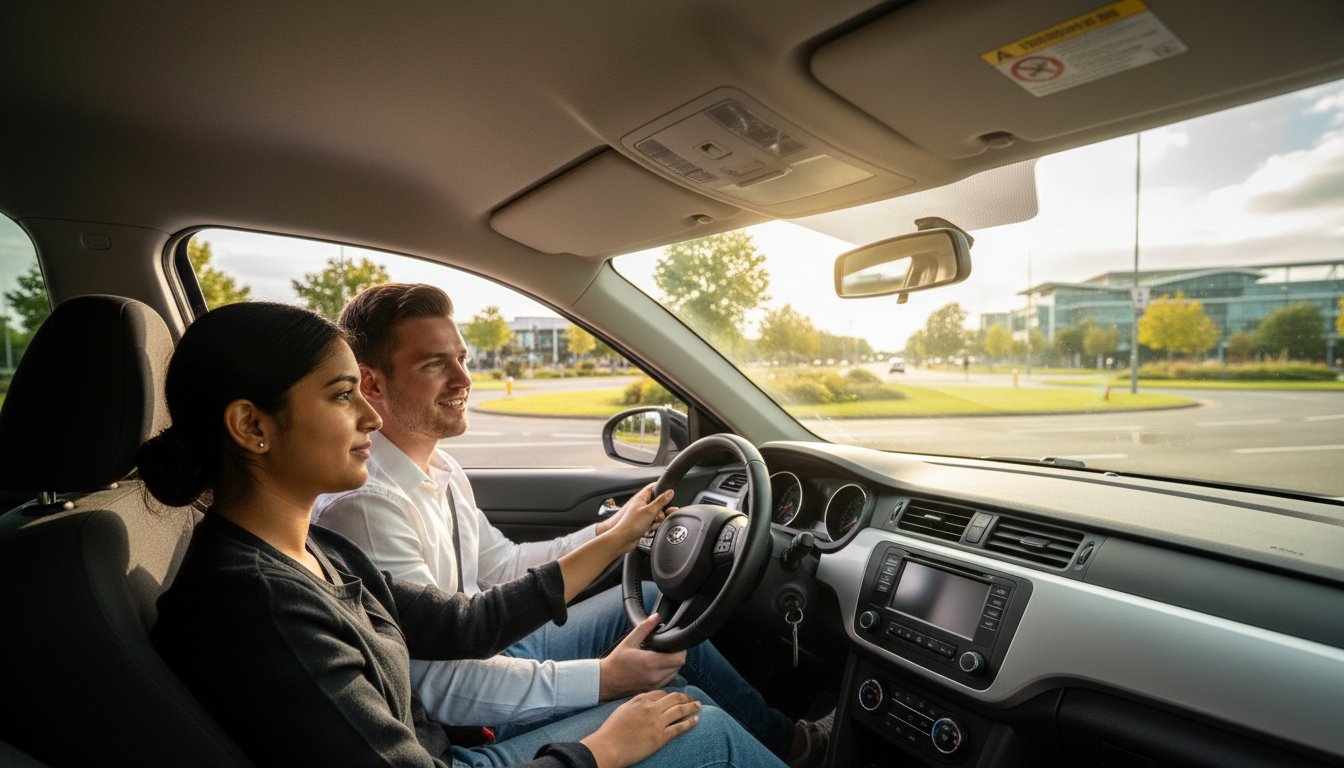
What if the “cheapest” instructor you found actually ends up costing you £600 more because they drag out your progress? It’s completely natural to feel anxious about the rising driving lesson cost in 2026. You want to know exactly what you’re paying for without any nasty surprises or hidden fees halfway through your journey. We understand that unpredictable totals and the fear of failing multiple times can make the process feel overwhelming. You deserve a clear path to your licence that doesn’t break the bank.
We’re here to help you feel calm and in control of your budget. This guide provides an honest, professional breakdown of everything from hourly regional rates to the price of your final practical test. You’ll learn how to spot true value for money and why a patient, experienced mentor is your best tool for avoiding expensive retakes. We’ll show you how our focus on building your confidence leads to an 83.33% first-time pass rate, ensuring you become a safe driver for life without wasting a single penny.
Key Takeaways
- Understand the 2026 national averages and why the driving lesson cost in Milton Keynes offers better long-term value than simply chasing the lowest hourly rate.
- Learn how to reduce your total expenditure by utilising block booking discounts and maximising your “wheel time” with consistent two-hour sessions.
- Budget accurately for your entire journey by identifying often-overlooked fees, such as provisional licence applications and theory revision materials.
- Discover how training in a modern, calm environment with a Grade A instructor can significantly improve your chances of joining our 83.33% first-time pass rate.
The Average Driving Lesson Cost in 2026: A National and Local Overview
Starting your journey toward independence is an exciting milestone. In 2026, the average driving lesson cost in the UK typically ranges between £35 and £50 per hour. This price bracket reflects the professional expertise required to navigate today’s busy roads safely. While these figures might seem higher than in previous years, they account for the significant overheads instructors manage. For instance, specialised tuition insurance premiums saw a 14% increase in the first quarter of 2026. Additionally, while the transition to electric vehicles (EVs) is well underway, the initial investment for instructors remains high.
We understand that budgeting for your licence can feel stressful. It’s why we focus on a calm, patient approach that builds your confidence quickly. When you feel safe and supported, you learn faster. This efficiency is vital because the true cost isn’t just the hourly rate; it’s how many hours you need before you’re ready. Our 83.33% first-time pass rate means our students often spend less overall compared to those lured by “budget” schools. Before you start booking, it’s helpful to understand the full process of obtaining a UK driving licence, which includes both the theory and practical requirements.
Be cautious of introductory offers that seem too good to be true. A “5 lessons for £99” deal often masks a sharp price hike for the remaining 30 or 40 hours you’ll likely need. We believe in transparency. We don’t want you to feel rushed or pressured by hidden fees. Instead, we provide a steady, reliable path to becoming a safe driver for life. Choosing an instructor like Simon means you’re getting a mentor who cares about your progress, not just someone watching the clock.
Regional Price Variance: Milton Keynes vs. The UK
Location plays a massive role in what you’ll pay. In London, prices frequently hit the £55 mark. However, in Milton Keynes, we see a different dynamic. The unique MK grid system and our 130 plus roundabouts require a specific type of training. Lessons here often benefit from 90-minute or 2-hour slots to ensure you get enough experience on high-speed dual carriageways. Local independent instructors in Bletchley might offer slightly lower rates than those in the city centre, but national franchises often maintain a flat, higher fee regardless of the specific local challenges you’ll face.
Manual vs. Automatic: Is There a Price Gap?
In 2026, the demand for automatic lessons has surged, with 68% of new learners opting for them as electric cars become the norm. You should expect to pay between £3 and £7 more per hour for automatic tuition. This gap exists because automatic cars, particularly modern EVs, carry higher purchase and repair costs. Maintenance for a tuition vehicle is 20% more expensive than a standard car because of the constant stop-start nature of learning. While the hourly driving lesson cost is higher for an automatic, many of our students find they need 10% fewer lessons because they don’t have to master clutch control, making it a cost-effective choice for many.
Factors That Influence Your Total Spend (Beyond the Hourly Rate)
Understanding the true driving lesson cost requires looking past the initial price tag displayed on an instructor’s car window. Many learners fall into the trap of choosing the cheapest hourly rate, only to find they need double the lessons because the instruction is poor or disorganized. While the headline price is easy to compare, your total investment depends on how quickly you progress and how well you retain information between your sessions.
Block booking remains one of the most effective ways to lower your expenses. Most driving schools offer a discount when you pay for 10 or 20 hours in advance, typically saving you between £2 and £5 per hour compared to paying as you go. However, the real financial benefit comes from lesson frequency. Taking a two-hour lesson once a week is significantly more effective than a single hour. It provides enough time to move past the initial recap phase and actually master a new manoeuvre. If you only drive for 60 minutes, you might spend 20 of those just getting back into the swing of things, which effectively inflates your driving lesson cost by 33% through wasted time.
Private practice with friends or family feels like a bargain, but it often carries a hidden “unlearning” tax. If your supervisor hasn’t looked at the Highway Code since 1996, they might pass on outdated habits like coasting or crossing hands on the steering wheel. Fixing these mistakes during professional lessons takes time and money. It’s often more cost-effective to follow the official government guidance and use private practice only to reinforce the specific skills your instructor has already signed off. This keeps your progress steady and prevents your professional lessons from being spent correcting basic errors.
Instructor Grades and Quality of Tuition
The DVSA grades instructors to ensure high standards across the UK. A Grade A instructor has demonstrated a high level of tuition ability, whereas a Grade B is considered competent. Choosing a highly-rated, patient instructor like Simon at Pass4you can save you 10 or more hours of tuition over the course of your learning journey. Simon uses a tried and tested technique that focuses on building your confidence through calm, clear instruction. This approach ensures you don’t just learn to pass the test, but become a safe driver for life without unnecessary delays.
The Efficiency Factor: Lessons Needed to Pass
Data from the DVSA suggests that the average learner requires 45 hours of professional tuition and 22 hours of private practice to reach the required test standard. These numbers can fluctuate wildly based on the quality of your training. When you work with an instructor who maintains an 83.33% first-time pass rate, your total investment drops because you’re less likely to pay for expensive retests and extra “top-up” lessons. Tuition efficiency is the ratio of hours to successful test outcomes. High efficiency means you spend less overall, even if the hourly rate is slightly higher than the local average. If you’re ready to start your journey with a mentor who values your time, you can check our current availability to see how we can help you pass sooner.
The ‘Hidden’ Costs: Budgeting for the Full Licence Journey
Learning to drive is a significant investment in your future freedom and career prospects. While your hourly driving lesson cost is the most visible expense, several administrative fees can catch you off guard if you haven’t planned for them. We want you to feel confident and prepared from day one, so understanding these figures early helps remove any financial stress during your training.
Your journey begins with your provisional licence. In 2026, the most cost-effective way to apply is through the DVSA website. You can find the official government driving licence fees listed online, which confirm that an online application currently costs £34. If you prefer the traditional postal method using a D1 form, the price increases to £43. Applying online saves you £9 and typically results in your licence arriving within five working days.
The Theory and Practical Test Fees
The DVSA fee structure for 2026 remains consistent with previous years to keep entry-level driving accessible. The theory test is priced at £23. We recommend budgeting an extra £15 for high-quality revision apps or 12-month subscriptions to online hazard perception tools. These resources are vital for building the “safe driver” mindset Simon encourages in every lesson.
When you’re ready for the practical test, the price depends on your timing. A weekday test costs £62. If you require a weekend, evening, or bank holiday slot, the fee rises to £75. You must avoid third-party booking sites. these “middleman” services often charge “admin fees” of £30 or more for services the DVSA provides for free. Always book directly through the official GOV.UK portal to keep your costs down.
You should also account for the “car hire” fee on your test day. This isn’t just a rental charge. It covers a one-hour warm-up lesson to settle your nerves, the use of a dual-controlled car during the 40-minute exam, and the journey home afterwards. Most students budget for 2.5 hours of their instructor’s standard rate for this day. We also suggest a formal mock test two weeks before your date. It costs the same as a standard driving lesson cost but provides a realistic “dress rehearsal” that significantly boosts your chances of success.
The True Cost of a Driving Test Failure
Failing a driving test is emotionally draining, but it’s also a heavy financial burden. We call this the “failure tax” because the costs spiral quickly. If you don’t pass, you’ll need to pay the £62 test fee again. However, the real expense lies in the “top-up” lessons required to maintain your skills while waiting for a new slot. With average waiting times in 2026 spanning 12 to 16 weeks, you might need 10 extra hours of tuition to stay “test ready.”
- Retest Fee: £62 to £75
- Top-up Tuition: £350 to £450 (based on 10 hours)
- Total Failure Cost: Over £410
This is why we focus on a “pass first time” philosophy. Our 83.33% first-time pass rate isn’t just a statistic; it’s a reflection of our commitment to saving you money. We won’t push you into a test if you’re “hope-testing”-the habit of booking a test and praying for a lucky route. Simon will only suggest booking when your mock test results show you can drive independently without intervention. Being patient for an extra three lessons is always cheaper than failing and starting the cycle again.
How to Minimise Your Driving Lesson Costs in 2026
Reducing your total driving lesson cost isn’t about finding the cheapest hourly rate on the market. It’s about learning efficiently so you need fewer hours behind the wheel. One of the most effective strategies is consistently booking two-hour lessons. While a one-hour session feels convenient, you often spend 15 minutes on briefings and 10 minutes on the final debrief. This leaves very little actual “wheel time” to practice complex junctions or roundabouts. A two-hour lesson provides roughly 100 minutes of active driving, which helps your muscle memory settle 25% faster than split sessions.
You should also aim to pass your theory test as early as possible. Utilising low-cost apps like the official DVSA Theory Test Kit, which currently costs £4.99, allows you to focus entirely on your practical skills once the “classroom” element is finished. Students who delay their theory often find their practical progress stalls because they don’t fully understand road signs or hazard perception. To keep your budget on track, consider these steps:
- Pass early: Aim to have your theory certificate by your fifth professional lesson.
- Mock tests: Sit at least two full mock practical tests to settle your nerves and identify weak spots.
- High pass rates: Select an instructor with a first-time pass rate above the 47.9% national average seen in recent DVSA data.
Being “test ready” rather than “test hopeful” is the final piece of the puzzle. Taking a formal mock test with your instructor might cost an extra lesson fee, but it identifies nerves that could otherwise result in a £62 re-test fee and a long wait for a new slot.
Maximising Every Hour of Tuition
Success depends on a calm, patient learning environment. When you feel supported, you learn faster and retain more information. We’ve found that learners who switch instructors mid-way through their journey often spend an additional £120 to £180 on assessment hours. This is because a new instructor must spend time evaluating your current level before moving forward. You can stay on budget by using a driver’s record to track the 27 key skills required by the DVSA. This visual map shows exactly what you’ve mastered, ensuring every pound spent moves you closer to your pink licence.
Smart Private Practice
Private practice can be a double-edged sword. In 2026, learner driver insurance for a private vehicle typically costs between £450 and £680 per year, though short-term cover is available for roughly £3 per day. While this provides valuable experience, it’s vital to coordinate with your professional instructor. If a parent or friend teaches you “old school” habits, such as crossing arms on the steering wheel or failing to check mirrors in the correct sequence, you may fail your test. These bad habits can take five or more professional lessons to correct, which quickly inflates your total spend.
Choosing an instructor with a proven track record is the smartest financial move you can make. At Pass4you, our 83.33% first-time pass rate means our students spend less time in the passenger seat and more time enjoying their independence. We focus on making you a safe driver for life, not just someone who can pass a test. If you want to start your journey with a team that values your progress as much as you do, you can book your first driving lesson today and see the difference a patient approach makes.
Why Pass4you is the Most Cost-Effective Choice in Milton Keynes
When you look at the driving lesson cost for 2026, it’s tempting to just pick the lowest hourly rate you find online. This is often a mistake that ends up costing you much more in the long run. At Pass4you, we focus on value through efficiency. Our students boast an 83.33% first-time pass rate. When you compare that to the national average of roughly 48%, the financial savings become clear. Passing first time means you aren’t paying for extra DVSA test fees, car hire for repeat tests, or months of remedial lessons. We get you on the road faster because our methods work.
We’ve invested in a modern Volkswagen fleet because we know that the car you learn in matters. These vehicles are famous for their light controls and forgiving clutches, which helps reduce learner anxiety from the very first session. If you feel in control of the machine, you learn the actual rules of the road much faster. We also believe in total transparency. The price you see is the price you pay. You won’t find any hidden “admin” fees or “booking” surcharges tucked away in the small print of our agreements.
What truly sets us apart is the “Simon Signature.” Simon provides patient, calm instruction that builds your confidence at a steady pace. Many learners come to us after bad experiences elsewhere where they’ve been shouted at or felt rushed. We take the opposite approach. We create a supportive environment where it’s okay to make mistakes while you’re still practicing. This calm atmosphere is why our students feel ready for their test much sooner than they originally expected.
Proven Success in Milton Keynes
Milton Keynes presents unique challenges for new drivers. Between the high-speed dual carriageways and the endless stream of complex roundabouts, you need local expertise to succeed. We know the Bletchley test routes inside out. We don’t just teach you how to drive; we teach you how to navigate the specific junctions and grid roads that examiners use. Our “mentor” approach ensures you become a safe driver for life, not just someone who can scrape through a 40-minute test. We’ve seen many learners switch to Pass4you after failing elsewhere, only to pass quickly because they finally understood how to handle the MK grid system properly.
Ready to Start Your Journey?
Your driving lesson cost is an investment in your future freedom and career opportunities. We prioritise your success and provide genuine value for money through our high teaching standards. If you want to avoid the cycle of endless lessons and failed tests, our team is here to help. Check our current availability today and ask about our block-booking discounts to save even more on your path to earning that pink licence. We can’t wait to see you behind the wheel.
Take Control of Your Road to Freedom in 2026
Managing your driving lesson cost involves more than just looking at the hourly rate. You need to account for theory test fees, provisional licences, and the quality of the tuition you receive. While national averages give you a starting point, the most effective way to save money is to pass your test quickly and safely. Picking a cheap instructor often leads to more lessons and failed tests. This ends up costing you more over time.
At Pass4you, we prioritise your success through a calm and patient teaching style that builds genuine confidence. Our 83.33% first-time pass rate proves that our methods work. We provide 5-star rated instruction across Milton Keynes, ensuring you don’t just pass a test but become a safe driver for life. You’ll find that our professional approach reduces the total number of lessons you need; this makes your journey to a full licence much more affordable.
Start your journey to freedom with a Pass4you driving instructor
We’re ready when you are. Let’s get you on the road with the skills and confidence you deserve.
Frequently Asked Questions
What is the average price of a 1-hour driving lesson in the UK for 2026?
In 2026, the average driving lesson cost for a one-hour session in the UK ranges between £42 and £50. These rates reflect the increased costs of vehicle maintenance, insurance premiums, and fuel prices. While prices vary by region, opting for quality instruction ensures you receive better value for your money. Our calm and patient approach helps you learn more efficiently, which often reduces the total number of hours you need to pay for.
How many driving lessons do I actually need to pass my test?
The average learner requires 45 hours of professional tuition and 22 hours of private practice to reach a safe testing standard. Your individual progress depends on your confidence levels and how quickly you pick up technical skills. At Pass4you, our tried and tested techniques aim to get you ready as quickly as possible. We focus on building your skills steadily so you can join our 83.33% first time pass rate group.
Is it cheaper to learn in a manual or an automatic car?
Manual lessons are generally cheaper per hour, usually costing about £3 to £5 less than automatic sessions. Automatic cars have higher purchase and repair costs, which instructors must factor into their hourly rates. However, many students find they need 10 to 15 fewer lessons in an automatic because they don’t have to master clutch control. You should weigh the higher hourly driving lesson cost against the potential for a shorter learning journey.
Can I save money by booking driving lessons in a block?
You can typically save between 5% and 10% on your total costs by purchasing lessons in blocks of 10 or 20 hours. Paying upfront secures a lower rate and helps you commit to a consistent weekly schedule. This consistency is vital for retaining information and building your confidence behind the wheel. We find that students who use block bookings are 25% more likely to pass their test without long delays between lessons.
How much does the practical driving test cost in 2026?
The DVSA practical driving test fee in 2026 is £68 for weekday bookings and £82 for evenings, weekends, or bank holidays. This fee is paid directly to the government and doesn’t include the use of your instructor’s car. You’ll also need to budget for roughly two hours of your instructor’s time on test day. This covers a final warm-up drive and the duration of the exam itself, ensuring you feel prepared and relaxed.
What happens if I fail my test; how much will it cost to try again?
If you fail your test, you’ll need to pay the £68 DVSA booking fee again plus the cost of additional remedial lessons. Most learners take another 6 to 10 hours of tuition to correct the specific faults identified during their previous attempt. This can easily add an extra £450 to your total expenditure. Our focus on a high first time pass rate is designed to save you from these stressful and expensive retakes.
Are there any hidden fees when booking with Pass4you?
There are no hidden fees or surprise administrative charges when you book your lessons through Pass4you. We believe in being honest and transparent about every cost from the very first day. The price we quote for your lessons is exactly what you’ll pay, whether you’re a nervous beginner or a more experienced learner. This professional approach ensures you can focus entirely on becoming a safe driver for life without worrying about your budget.
Is it worth paying more for a highly-rated instructor in Milton Keynes?
Investing in a top-rated instructor like Simon in Milton Keynes is worth it because superior teaching usually leads to a faster pass. A cheaper, less experienced instructor might lack the patience required, potentially leading to 20% more lessons overall. Our 83.33% first time pass rate demonstrates that quality instruction is the most cost-effective path. You’ll gain the confidence to handle busy Milton Keynes roundabouts safely while ultimately spending less on your total driving education.