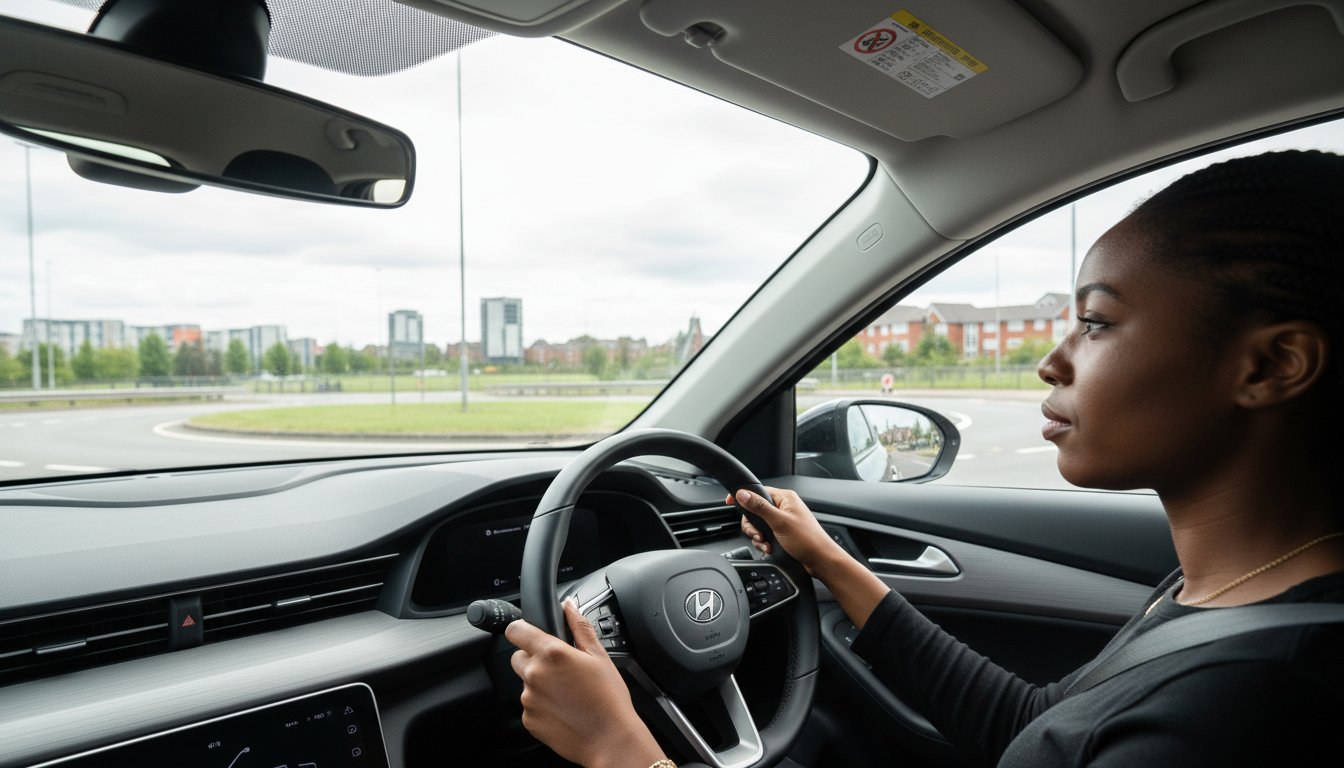
Last Tuesday, Sarah sat at the Milton Keynes test centre, her hands gripping the wheel as she looked toward the daunting H6 Childs Way roundabout. Like 51.1% of learners who didn’t pass their first time last year, she was terrified that one minor slip-up would mean wasting another £62 and waiting months for a new slot. It’s a heavy weight to carry, especially when you’re trying to memorise the 2026 DVSA requirements while managing busy local traffic.
We understand that the practical driving test can feel overwhelming, and it’s natural to worry about complex independent driving rules or those tricky multi-lane junctions. This guide is designed to replace that anxiety with the same calm confidence that has helped our students achieve a 83.33% first-time pass rate. You’ll gain a clear mental map of the entire test day and learn the specific professional secrets to mastering Milton Keynes’ most challenging roads. We’re going to break down every step of the process to ensure you’re fully prepared to become a safe driver for life.
Key Takeaways
- Understand exactly what the DVSA expects during your 40-minute assessment to ensure you meet the national standard for safe, independent driving.
- Learn how to navigate the unique challenges of the Milton Keynes grid system and the complex roundabouts frequently encountered near the Bletchley test centre.
- Build your confidence by mastering the five essential stages of the practical driving test, from the initial eyesight check to the vehicle safety questions.
- Discover why realistic mock tests and daily “Show Me, Tell Me” practice are vital for calming your nerves and securing a successful first-time pass.
- Get expert advice on booking your appointment through official channels to avoid scams and a checklist of everything you must bring on the day.
Understanding the Practical Driving Test in 2026
The practical driving test is more than just a 40-minute drive with an official. It’s a structured assessment designed by the DVSA to confirm you can handle a car independently and safely across various road conditions. The primary goal is to verify you meet the National Standard for driving cars and light vans. This isn’t about being a perfect driver who never makes a mistake. It’s about showing you’re a responsible road user who doesn’t put others at risk. During the session, you’ll need to demonstrate competence in vehicle handling, hazard perception, and making independent decisions without constant prompts.
The United Kingdom driving test has seen several updates over the years to keep pace with busier roads and new technology. In 2026, the psychological hurdle feels higher for many learners than it did for previous generations. With test waiting times at many local centres averaging 15 to 20 weeks, students often feel they’re under immense pressure to succeed on their first attempt. The rising cost of fuel and insurance adds another layer of stress to the process, making the stakes feel much higher than a simple skills check.
At Pass4you Driving School, we simplify this mindset by focusing on our “safe driver for life” philosophy. We don’t just teach you to pass a 40-minute exam; we focus on building the habits that make you a confident motorist for years to come. Our instructors, like Simon, use a calm and patient method that has helped us achieve an 83.33% first-time pass rate. When you view the test as a simple demonstration of your daily driving habits rather than a high-stakes performance, the anxiety naturally lifts. We’ve honed a tried and tested technique that replaces panic with professional muscle memory.
The Requirements: What You Need Before Booking
You must hold a valid UK provisional driving licence before you can even think about the test centre. In 2026, ensure your photocard hasn’t expired, as the DVSA requires renewals every 10 years. Passing your theory test is mandatory before booking the practical driving test, and you’ll need that certificate number for the booking portal. Finally, residency rules state you must have lived in the UK for at least 185 days in the last 12 months to be eligible for a full licence.
Managing Test Day Nerves
Many learners struggle with “examiner anxiety” in the days leading up to their slot. It’s helpful to reframe the person in the high-vis vest as a professional observer whose only job is to ensure you’re safe. They aren’t looking for reasons to fail you; they’re looking for reasons to give you a licence. Working with a calm, patient instructor in the final three weeks helps build the resilience you need to stay steady. We find that students who have a friendly, understanding mentor are much more likely to stay focused during the independent driving section. Test readiness is a combination of technical skill and emotional regulation.
The Five Essential Stages of Your Driving Test
Feeling a bit of stage fright before your big day is completely normal. Most learners feel those butterflies, but understanding exactly what happens during the 40 minute exam can help you stay calm and focused. Your examiner isn’t looking for a perfect robot; they want to see a safe, confident driver who can handle everyday road situations without putting others at risk.
Step 1: The Eyesight Check
Before you even get behind the wheel, you must read a number plate from a distance of 20 metres. This is a non negotiable safety requirement. If you usually wear glasses or contact lenses for driving, make sure you have them with you. It is a quick task that sets a positive, professional tone for the rest of the session.
Step 2: “Show Me, Tell Me” Questions
You will be asked two vehicle safety questions. The “tell me” question happens at the start of the test, where you explain how to carry out a safety task. The “show me” question occurs while you are driving, such as demonstrating how to clear the windscreen. You can check the full list of potential questions in the official driving test requirements to ensure you feel prepared.
Step 3: General Driving Ability
This is the core of your practical driving test. You will navigate various road conditions, including quiet residential streets and busier main roads with higher traffic speeds. The examiner will observe your lane discipline, your use of mirrors, and how you react to other road users. At Pass4you, we’ve found that maintaining a steady, patient pace helps students achieve our 83.33% first time pass rate.
Step 4: Reversing Your Vehicle
You will be asked to complete one of three possible reversing manoeuvres. The goal here is to show you have total control over the car while keeping a keen eye on your surroundings. Whether you are backing into a bay or parking behind a parked car, accuracy and constant observation are your best friends.
Step 5: Independent Driving
For roughly 20 minutes, you will drive without step by step instructions. You will either follow a sat nav or follow traffic signs to a specific destination. This stage proves you can make your own decisions safely while managing the vehicle.
Mastering the Manoeuvres
You might be asked to parallel park at the side of the road, which requires excellent spatial awareness. Alternatively, you may face bay parking. This involves either driving in and reversing out, or reversing in and driving out. The final possibility is pulling up on the right hand side of the road, reversing two car lengths, and moving off again. If you feel nervous about these, practicing with a patient instructor like Simon can build the confidence you need to ace them.
Independent Driving and Sat Nav Use
The examiner will provide and set up the sat nav for you. You aren’t allowed to use your own device. If you take a wrong turning, don’t panic. It is not an automatic fail. The examiner will simply help you get back on track. Looking ahead to the 2026 update, the DVSA continues to emphasise that drivers must remain calm even if the technology glitches or the signal drops out. Just keep driving safely and wait for the next instruction.
Navigating Milton Keynes: Local Test Centre Insights
Milton Keynes is famous for its unique grid system. It feels very different from traditional British towns with their winding, narrow streets. For a learner, this means mastering a specific type of road layout that demands high-speed confidence and precise lane discipline. Most local tests start at the Milton Keynes (Bletchley) Test Centre on Cadman Square. From the moment you leave the car park, you’re likely to encounter the H and V roads. These horizontal and vertical grid lines define the city and form the backbone of your test route.
Understanding these roads is vital for the independent driving part of your practical driving test. You’ll be asked to follow road signs or a sat-nav for roughly 20 minutes. If you know that ‘H’ roads run east-west and ‘V’ roads run north-south, you’ll feel much more in control when an examiner gives a direction. At Pass4you, we make sure you’re familiar with these specific routes. We use modern, reliable VW vehicles that are easy to handle, ensuring you feel calm and prepared. Our lead instructor, Simon, has helped many students achieve our 83.33% first-time pass rate by focusing on these local nuances and building your confidence on the grid.
The Milton Keynes Roundabout Challenge
Roundabouts are the defining feature of driving in this city. You’ll encounter everything from small mini-roundabouts in residential pockets to massive, multi-lane junctions like Abbey Hill or Old Stratford. The biggest challenge here is lane discipline. Many roundabouts in Milton Keynes use “spiral” markings. This means the lane you enter will naturally push you outwards toward your intended exit. Staying in the correct spiral is the top priority for examiners here. If you find yourself in the wrong lane, don’t panic or swerve. Stay safe, follow the lane you’re in, and let the examiner help you get back on track.
Observation techniques are just as important at high-speed entries. You need to judge the speed of traffic approaching from the right on roads like the A5 or A421 very quickly. We teach you to look early as you approach the give-way line. This helps you keep your momentum where it’s safe to do so, which is exactly what an examiner wants to see. It shows you’re a confident, competent driver who isn’t hesitant.
Rural Roads vs. Residential Streets in MK
Your test won’t just be limited to the grid. You’ll likely head out towards the 60mph rural stretches on the outskirts of the city. These roads require a sharp focus on speed limit changes and hidden farm entrances. It’s a huge contrast to the narrow, parked-car-lined streets you’ll find in Bletchley or Wolverton. In these residential areas, your hazard perception is tested to the limit. You’ll need to manage your speed carefully and show plenty of clearance when passing oncoming cars in tight spaces.
To help you prepare for these varied conditions, we recommend checking out the official Ready to Pass? preparation advice from GOV.UK. It’s an excellent resource for managing nerves and understanding test readiness. You should also read our guide on Common Mistakes That Cause People to Fail Their Test to see where others often struggle in these specific MK environments. Successfully balancing the high speed of the grid roads with the precision required in residential areas is the secret to passing your practical driving test first time. We’re here to guide you through every mile until you’re ready to drive away with your pink licence.
How to Prepare Like a Pro: Beyond the Basics
Preparing for your practical driving test requires more than just knowing how to steer. At Pass4you, we’ve developed what we call the 83.33% Secret based on our consistent first-time pass rate. This technique isn’t a shortcut; it’s a structured approach to preparation that actually saves you money. By focusing on precision from day one, our students typically require fewer hours of tuition to reach test standard. This reduces your total spend on lessons and avoids the £62 cost of booking a retest, alongside the long waiting times for a new slot.
Many learners feel tempted to clock up extra hours with friends or family to save a few pounds. While the intention is good, this often introduces bad habits that are difficult to unlearn. A friend might not notice you’ve stopped checking your blind spot or that you’re “palming” the steering wheel. On the day of your exam, these small errors aggregate into serious faults. Professional lessons keep you aligned with current DVSA requirements, ensuring you don’t have to pay for a second test because of someone else’s outdated driving style.
Don’t treat the “Show Me, Tell Me” questions as a last-minute revision task. You should use the checklist daily until the answers feel like muscle memory. Whether you’re explaining how to check the brake fluid or demonstrating the horn, these marks are the easiest ones to secure. Starting your test with a confident answer settles your nerves and sets a positive tone for the rest of the drive. If you can explain the technical aspects of the car while relaxed, the physical driving usually follows suit.
The Role of the Mock Test
Mock tests are the ultimate tool for building mental resilience. We recreate the “quiet examiner” environment, where the friendly chatter of a lesson stops and the formal assessment begins. This helps you identify the difference between a minor driving fault and a serious one before they actually count. It’s better to stall during a practice run than on the real day. You can prepare yourself properly by booking a Mock Test in Milton Keynes to experience the pressure in a safe, supportive setting. This simulation ensures that nothing on the day of your practical driving test feels like a surprise.
Vehicle Familiarity
We choose modern Volkswagen tuition vehicles for their exceptional reliability and user-friendly controls. You’ll become an expert on the specific clutch bite point and the nuances of electronic handbrakes. Consistency is your best friend when nerves are high. We focus on these cars because their feedback is clear, making it easier for you to feel what the vehicle is doing. Switching to a different car the week before your test is a high-risk strategy that often leads to avoidable stalls or control errors.
Booking and Passing: Your Path to Freedom
You have put in the hours, mastered the manoeuvres, and built your confidence behind the wheel. Now it is time to turn that hard work into a full licence. The final hurdle is the practical driving test, a 40 minute assessment that marks the beginning of your life as an independent driver. This moment is about more than just following directions; it is about demonstrating that you can manage a vehicle safely and responsibly in real world conditions.
Securing Your Test Date
Booking your test requires a strategic approach. You should only use the official DVSA booking service, which is available daily from 6:00am until 11:40pm. Avoid third party “cancellation” websites that promise early slots for an extra fee. These services often overcharge and can be unreliable. In 2026, the cost for a weekday test is £62, while evening, weekend, and bank holiday appointments cost £75. Before you commit to a date, always check with Simon or your instructor. We want to ensure you are fully prepared so you don’t waste your time or money on a test you aren’t ready for yet.
On the day of your exam, you must bring your provisional photocard driving licence. It is also wise to have your theory test pass certificate handy, though the examiner can usually verify this electronically. Beyond the paperwork, your most valuable asset is a positive mindset. Arrive at the test centre at least 15 minutes early to settle your nerves. Remember that the examiner isn’t looking for perfection; they are looking for a safe, competent driver who understands the rules of the road.
When the test concludes, the examiner will ask you to pull over and turn off the engine before delivering the result. They will provide a summary of any driving faults. If you pass, you will receive a training certificate and your full licence will be sent in the post. If you don’t pass this time, don’t be discouraged. The feedback provided is a roadmap for your next few lessons. We will sit down together, look at the examiner’s report, and work specifically on those areas to ensure you’re ready for the next attempt.
Why Pass4you is the Logical Choice
Choosing the right instructor makes the difference between a stressful experience and a successful one. At Pass4you, we pride ourselves on a patient, calm environment. There is no shouting or pressure here, just professional guidance tailored to your pace. Our results speak for themselves. While the national average pass rate often sits below 50%, our students achieve an impressive 83.33% first time pass rate. We don’t just teach you how to pass a practical driving test; we help you become a safe driver for life. Our tried and tested techniques in Milton Keynes have helped hundreds of nervous learners find their confidence.
Ready to start your journey toward independence with a team that genuinely cares about your success? Book your first lesson with Simon and the Pass4you team today and experience the difference that expert, patient instruction makes.
Start Your Journey to Driving Independence Today
Stepping into the driver’s seat for your practical driving test in 2026 doesn’t have to be a source of anxiety. By mastering the five essential stages and familiarising yourself with the unique layout of Milton Keynes, you’re already ahead of the curve. Success comes down to consistent preparation and finding an environment where you feel supported. You’ve seen how understanding local test centre insights and focusing on beyond-the-basics preparation can transform your confidence on the road.
Simon provides the patient, expert guidance you need to navigate every complex roundabout and dual carriageway with total ease. You’ll enjoy learning in a modern VW tuition vehicle that makes every lesson comfortable and safe. Our proven methods focus on your individual needs, ensuring you don’t just get a licence but become a confident road user for life. We’ve helped hundreds of nervous learners overcome their fears through calm instruction and a tailored approach that saves you money by requiring fewer lessons overall.
Join the 83.33% who pass first time; book your Milton Keynes lessons today. We’re ready to help you gain your freedom and start your new life on the road with confidence.
Frequently Asked Questions
How long is the practical driving test in 2026?
Your practical driving test in 2026 lasts for approximately 40 minutes. This includes 20 minutes of independent driving where you’ll follow a sat nav or traffic signs. If you’re taking an extended test, the duration increases to 70 minutes. We’ll ensure you’re calm and ready for the full session, helping you feel confident from the moment you leave the test centre.
What happens if I make a mistake during my driving test?
Making a small mistake doesn’t mean you’ve failed immediately. You can make up to 15 driving faults, often called minors, and still pass. However, a single serious or dangerous fault results in a fail. If you do make a slip-up, stay patient and keep focused on driving safely. We’ve helped many nervous learners stay calm and recover after a minor error during their big day.
Can I take my driving test in my own car?
You can take the practical driving test in your own car as long as it meets specific DVSA requirements. Your vehicle must be taxed, insured, and have a current MOT. You’ll also need to fit an extra rear-view mirror for the examiner and display L-plates. Most of our students prefer using Simon’s car because they feel more confident in a familiar vehicle they’ve used for every lesson.
How many minor faults are allowed on the driving test?
You’re allowed a maximum of 15 driving faults during your test. If you earn 16 or more minors, you won’t pass. It’s important to remember that repeating the same minor fault can be upgraded to a serious fault. Our proven methods have helped us achieve an 83.33% first time pass rate, as we focus on building your confidence to keep these small errors to a minimum.
What are the “Show Me, Tell Me” questions for 2026?
The “Show Me, Tell Me” section consists of 2 safety questions designed to prove you know how to maintain your vehicle. You’ll answer one “tell me” question before you start driving and one “show me” question while you’re on the move. These might include showing how to wash the windscreen or telling the examiner how you’d check the tyre pressure. We’ll practice these together until you’re 100% confident.
What is the best time of day to take a driving test in Milton Keynes?
In Milton Keynes, booking your test for 10:14 am is often the best choice to avoid the heavy morning rush hour traffic. The roads around the Bletchley or Milton Keynes test centres are generally calmer during this mid-morning slot. This allows you to feel more relaxed and focused on your surroundings without the stress of peak-time congestion, helping you maintain a steady, safe rhythm.
What happens if my driving test is cancelled due to bad weather?
If the DVSA cancels your test because of snow, ice, or thick fog, they’ll automatically book a new appointment for you at no extra cost. You won’t have to pay the £62 fee again. They’ll usually send you the new date within 3 working days. We’ll stay in close contact during bad weather to ensure you’re supported and ready for your rescheduled date whenever it happens.
Do I need to bring my theory test certificate to the practical test?
You should bring your theory test pass certificate to your driving test appointment. While examiners can often check your details on their digital systems, having the physical certificate prevents any unnecessary delays. You must also bring your UK photocard driving licence, as the examiner cannot start the test without it. We’ll double-check you have all your documents ready before we head to the test centre together.