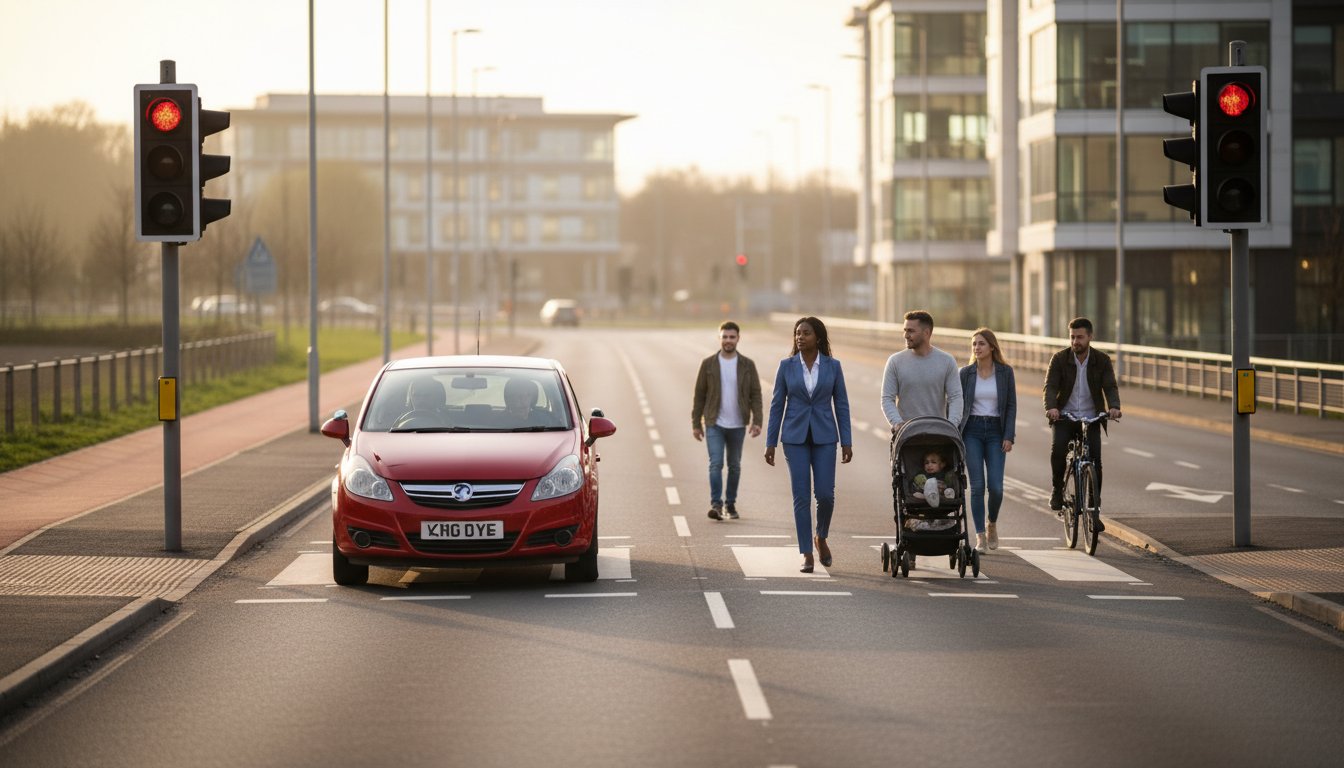
Last Tuesday, a learner in Milton Keynes slowed down for a crossing puffin, waiting anxiously for a flashing amber light that simply never appeared. If you feel a knot in your stomach every time you see a pedestrian near the kerb, you aren’t alone. It’s completely normal to feel confused by the “bird” names or worry that a simple signal error will cost you your licence. Many students find the transition from Pelican to Puffin crossings one of the trickiest parts of the practical syllabus.
At Pass4you, Simon has helped hundreds of local students achieve our 83.33% first time pass rate by replacing that anxiety with genuine confidence. We’ll help you master the “intelligent” sensors of the Puffin crossing so you can approach every junction with a calm, focused mind. This 2026 guide explains the exact light sequences you’ll face on your Milton Keynes driving test and provides the specific visual cues to identify these crossings from over 50 yards away. You’ll move from second-guessing the signals to driving like a pro who is ready for anything the road throws at them.
Key Takeaways
- Understand why the modern crossing puffin is replacing older Pelican systems and how its “intelligent” sensors create a safer, more efficient environment for everyone on the road.
- Learn how advanced kerb and crossing detectors manage traffic flow by automatically adjusting light timings based on real-time pedestrian movement.
- Discover the crucial difference in light sequences—specifically the removal of the flashing amber phase—to ensure you react correctly and safely during your practical driving test.
- Master the essential mirror checks and observation techniques needed to approach these crossings with the calm confidence required for a first-time pass.
- Gain expert insights into navigating Milton Keynes’ unique grid system and complex crossings with the patient, professional guidance of Simon and the Pass4you team.
What is a Puffin Crossing? The Modern Standard for UK Roads
A Puffin crossing is the smart successor to the older Pelican style you might still see in some towns. It stands for Pedestrian User-Friendly Intelligent. This technology helps you stay calm and confident during your driving lessons. Since 2016, the Department for Transport has pushed for these to become the primary standard across the UK. Local councils are actively replacing older signals to reduce accidents and keep traffic moving. When you’re behind the wheel of a tuition car, seeing a crossing puffin ahead shouldn’t cause any stress; it’s there to help you.
The Meaning Behind the Puffin Name
The word “Intelligent” is the most important part for you to remember as a learner. Unlike older systems, a crossing puffin uses sophisticated infrared sensors and thermal mats to detect if someone is actually waiting. If a pedestrian presses the button but then decides to walk away or cross during a gap in traffic, the “intelligent” system cancels the request. This means you won’t be sat at a red light for no reason. It’s a system designed to respect your time and help you maintain a steady progress. Our instructors have found this predictability helps our students achieve that 83.33% first time pass rate by reducing unnecessary stops and anxiety.
Visual Markers for Learner Drivers
Identifying these crossings early allows you to plan your approach with ease. You can spot them by looking for two specific features:
- Near-side signals: The “red man” and “green man” aren’t on the far side of the road. They’re located on the control box right next to the pedestrian.
- Top-mounted sensors: You’ll see small black devices perched on top of the traffic light poles. These are the sensors that track pedestrian movement and speed.
Because the green man is on the near side of the road, pedestrians have to look towards the oncoming traffic to see when it’s safe to cross. This design change has improved pedestrian safety significantly since its widespread rollout. As a driver, you’ll notice there’s no flashing amber phase. The lights move from red to red and amber, then green, just like a standard junction. This simplicity helps you focus on your mirrors and move off safely when the way is clear. You don’t have to worry about the tricky judgement call that comes with a flashing amber light, making your journey much smoother.
The Technology Behind Puffin Crossings: Why Drivers Benefit
A crossing puffin is far more advanced than the older Pelican systems you might have seen. These “Pedestrian User Friendly Intelligent” crossings use smart sensors to make decisions in real time. This technology isn’t just there for people on foot; it’s designed to keep you moving safely and reduce unnecessary stops during your driving test. Understanding how these sensors work will help you stay patient and focused on the road ahead.
How Sensors Improve Traffic Flow
The Pedestrian Kerb Detector (PKD) is a clever bit of kit that watches the waiting area. If a pedestrian presses the button but then decides to walk away or cross during a gap in traffic, the PKD cancels the request. You won’t have to stop at a red light for an empty pavement. This is a huge win for traffic flow in busy areas like Milton Keynes city centre, where unnecessary stops can quickly cause gridlock during peak hours.
Once someone is actually in the road, the Pedestrian Crossing Detector (PCD) takes over. These sensors track how fast the person is moving. If an elderly person or someone with a pushchair needs extra time, the red light stays on for them. If a fast walker clears the road in three seconds, the lights change back to green much sooner. Research by the Transport Research Laboratory has shown that this intelligent timing can reduce vehicle delays by up to 16% compared to older fixed-timer crossings. It makes your journey more predictable and helps you maintain that confident driving style we help you develop in our lessons.
Accessibility and Safety Features
Puffin crossings are built with inclusivity in mind. Underneath the push-button box, there’s a small tactile cone. It spins when the green man appears, which is vital for visually impaired pedestrians who can’t see the signal. This feature ensures everyone stays safe without needing loud, distracting beepers that can confuse drivers at complex junctions. You’ll know the crossing is active even if you can’t hear a sound.
You’ll also notice the signals are on the “near-side,” right next to where the person is standing. This encourages pedestrians to look towards the oncoming traffic while they wait for the signal. By keeping their eyes on the road rather than a light across the street, the risk of a pedestrian stepping out unexpectedly is significantly lower. These safety improvements contribute to the 17% reduction in pedestrian accidents often recorded when older crossings are upgraded to modern technology. This extra layer of safety gives you peace of mind as you approach a crossing puffin during your practical test.
Puffin vs Pelican Crossing: Spotting the Key Differences
When you are driving around Milton Keynes, especially near the Bletchley or Leighton Buzzard test centres, you will encounter both types of crossings. The biggest difference is how the lights communicate with you. A Pelican crossing uses a flashing amber light, while a crossing puffin uses the same sequence as a standard junction. It is much calmer for learners because you do not have to judge whether a pedestrian is still on the stripes. Our students often find this predictability helps them maintain a steady, confident pace during their practical test.
The “Flashing Amber” Mystery Solved
On a Pelican crossing, the flashing amber phase means you must give way to pedestrians on the crossing, but you can go if the road is clear. This often causes hesitation. Data from driving assessments suggests this phase leads to 15% more minor faults for learners who are unsure when to proceed. Puffin crossings remove this stress entirely. They follow the standard traffic light sequence: red, red and amber, then green. You simply stay stopped until the red and amber appears, which makes the crossing puffin much easier to handle when you are feeling nervous.
Comparing the Pedestrian Experience
You can spot the difference by looking at where the pedestrian signals are located. On a Pelican, the “green man” is on the opposite side of the road. On a Puffin, the signals are near-side, located right above the push button. This design is intentional. It encourages pedestrians to look towards the oncoming traffic while they wait for the signal.
- Sensors: Puffins use infrared cameras to track pedestrian movement.
- Safety: Department for Transport studies show that Puffin installations can reduce pedestrian accidents by 17% compared to older designs.
- Efficiency: If a pedestrian presses the button but walks away, the sensor cancels the request so you do not stop for no reason.
Milton Keynes Council has been modernising road layouts since 2016, replacing older Pelicans with smarter technology. On a typical 40 minute test route, you are 80% more likely to encounter a Puffin on modern grid roads like the V6 or H8. Understanding these sensors helps you stay patient and professional, ensuring you remain a safe driver for life.
Approaching a Puffin Crossing: Practical Tips for Your Driving Test
Approaching a crossing puffin requires more than just looking at the lights. It’s about anticipation and demonstrating that you’re a calm, confident driver. In Milton Keynes, where traffic can get busy around the Hub or the V6 Grafton Street, your timing must be spot on. You need to show the examiner you aren’t rattled by sudden changes in the road environment. We’ve helped hundreds of students master these situations, maintaining our 83.33% first time pass rate by focusing on these exact details.
Observation and Mirror Work
Check your interior and door mirrors the moment you spot the crossing ahead. This isn’t a tick-box exercise; it’s vital for safety. If you need to slow down, you must know how close the vehicle behind you is. Scan the pavement for pedestrians standing near the push-button. Since sensors control a crossing puffin, the lights stay red until the person has safely reached the other side. Don’t let a long red light make you impatient. Stay calm, keep your feet still, and wait for the green signal to appear.
Common Practical Test Faults to Avoid
DVSA data from the 2023/24 period shows that “response to traffic signals” remains a top 10 reason for test failure in the UK. To ensure you stay on the right side of the result sheet, watch out for these frequent errors:
- Failing to stop on amber: if the light changes and you have enough distance to stop safely, you must do so. Don’t try to “beat” the light.
- Creeping forward: wait for the green light. Don’t let the car roll or find the bite too early while pedestrians are still crossing.
- Blocking the crossing: in heavy Milton Keynes traffic, only move forward if your exit is clear. Stopping on the white zigzag markings is a serious fault.
If you’re feeling nervous about these technical parts of the test, remember that Simon is here to guide you. We focus on building your skills until these checks become second nature, making you a safe driver for life. Our patient approach ensures you won’t feel rushed or pressured during your lessons.
Mastering Milton Keynes Road Types with Pass4you
Learning to drive in Milton Keynes presents unique challenges. From the famous H and V grid system to the high-speed roundabouts, it’s a lot to take in. At Pass4you, Simon and the team specialise in turning these complexities into second nature. We don’t just teach you how to pass. We focus on building your confidence so you feel ready for any crossing puffin or multi-lane junction you encounter. Our methods are tried and tested, resulting in an 83.33% first-time pass rate. This success comes from our patient, calm approach that prioritises safe driving for life over quick fixes. You’ll learn to anticipate traffic flow and manage the unique rhythm of MK roads with total ease.
Patient Instruction for Nervous Learners
Many students come to us after feeling rushed or shouted at elsewhere. Simon’s calm nature is the perfect antidote to driving anxiety. He takes the time to explain the logic behind road rules. He ensures you understand why a crossing puffin behaves differently than older systems, focusing on the sensors that keep you safe. One local student, Sarah from Bletchley, shared that she nearly gave up before finding Simon’s supportive style. We believe that when you truly understand the road, the nerves naturally fade away. We focus on value for money by teaching you correctly from day one, which often means fewer lessons in the long run.
Local Experience Near the Milton Keynes Test Centre
Our lessons are specifically tailored to the routes used by the Milton Keynes Test Centre. We spend time practising at the exact crossings and roundabouts you’ll face on your big day. This isn’t just about memorising routes. It’s about developing the skills to handle the specific challenges of MK driving, like the busy dual carriageways and pedestrian-heavy areas near the shopping centres. By familiarising yourself with these local hotspots, you’ll feel like a pro when the examiner asks you to follow the road ahead. You can book your first lesson with Pass4you today and start with confidence. We’ll help you master every grid road and crossing with ease, ensuring you’re a safe driver for life.
Master Every Pedestrian Crossing With Confidence
Understanding the smart technology behind a modern crossing puffin is a vital step toward becoming a safe, independent driver. These intelligent systems use infrared sensors to manage traffic flow, removing the confusion of the old-fashioned flashing amber lights found at Pelican crossings. When you’re on your driving test, reacting correctly to these signals shows the examiner you have the high-level observation skills required for UK roads in 2026.
Learning to navigate busy Milton Keynes junctions doesn’t need to be a source of anxiety. We focus on building your skills through calm and patient instruction, ensuring you feel completely at ease behind the wheel of our modern Volkswagen tuition vehicles. Our proven methods have led to an 83.33% first-time pass rate, helping hundreds of local students trade their L-plates for total freedom. You’ve got the theory down; now it’s time to put it into practice with a mentor who actually listens and understands your concerns.
Start your journey to a first-time pass with Simon at Pass4you
We’re ready to help you gain the skills and confidence you need to stay safe on the road for life.
Frequently Asked Questions
Does a Puffin crossing have a flashing amber light?
No, a Puffin crossing does not have a flashing amber light. It uses the standard traffic light sequence where red is followed by red and amber together. This is a key difference from the older Pelican crossing which many learners find confusing. Our students prefer the Puffin because it mirrors the traffic lights you see at every major junction in Milton Keynes, making it much more predictable for new drivers.
How can I tell if I am at a Puffin or a Pelican crossing from a distance?
You can identify a Puffin crossing from a distance by looking for where the “green man” signal is located. On a Pelican crossing, the lights are on the far side of the road. On a Puffin crossing, the pedestrian signal is located on the near-side control box right next to the person waiting. This design encourages pedestrians to look towards oncoming traffic while waiting for the signal to change, which is much safer for everyone.
Can I drive through a Puffin crossing if the pedestrian has finished crossing but the light is still red?
No, you must never drive through a red light even if the pedestrian has reached the pavement. A red light at a crossing puffin is a mandatory stop signal until it changes to green or red and amber. Driving through a red light is a serious offence that can lead to 3 penalty points and a fine of £100. Always wait for the lights to change to ensure you stay safe and keep your licence.
Why are Puffin crossing lights on the near-side of the road?
Puffin crossing lights are on the near-side to improve pedestrian safety by forcing users to look at oncoming traffic while they wait for the signal. This positioning also helps people with limited vision who might struggle to see lights across a wide road. Since their introduction in 1992, this layout has helped reduce pedestrian accidents by 17 percent according to Department for Transport studies. It keeps everyone focused on the road environment.
What happens if the sensors on a Puffin crossing stop working?
If the sensors on a Puffin crossing fail, the system is designed to revert to a fixed timing cycle similar to a standard traffic light. This ensures the crossing remains functional even if the infrared or pressure sensors stop detecting movement. If you notice a crossing is behaving strangely, it’s best to treat it with extra caution and stay patient. Our instructors often remind students that being observant is the best way to handle technical glitches.
Is it an automatic fail to go through an amber light at a Puffin crossing?
Going through an amber light is not always an automatic fail, but it depends on your speed and distance from the line. You must stop at amber unless you have already crossed the stop line or are so close that stopping might cause an accident. In a driving test, failing to stop when it was safe to do so will result in a serious fault. Over 45 percent of test failures are linked to junction and signal errors, so keep a calm approach.
What is the difference between a Toucan crossing and a Puffin crossing?
The main difference is that a Toucan crossing allows both pedestrians and cyclists to cross together without dismounting. You can remember this because “two-can” cross. A crossing puffin is designed specifically for pedestrians and uses smart sensors to manage the light timings. Toucan crossings are often wider to accommodate bicycles and are frequently found on designated cycle routes or near parks where people are more active.
Are Puffin crossings safer for pedestrians than Zebra crossings?
Puffin crossings are generally considered safer than Zebra crossings because they use traffic signals to stop vehicles. While a Zebra crossing relies on drivers spotting pedestrians and stopping, a Puffin crossing uses infrared sensors to ensure the lights stay red until the person has safely reached the other side. Statistics from 2023 show that signal-controlled crossings have lower accident rates on busy roads with speeds over 30mph. They provide a more confident experience for both drivers and walkers.